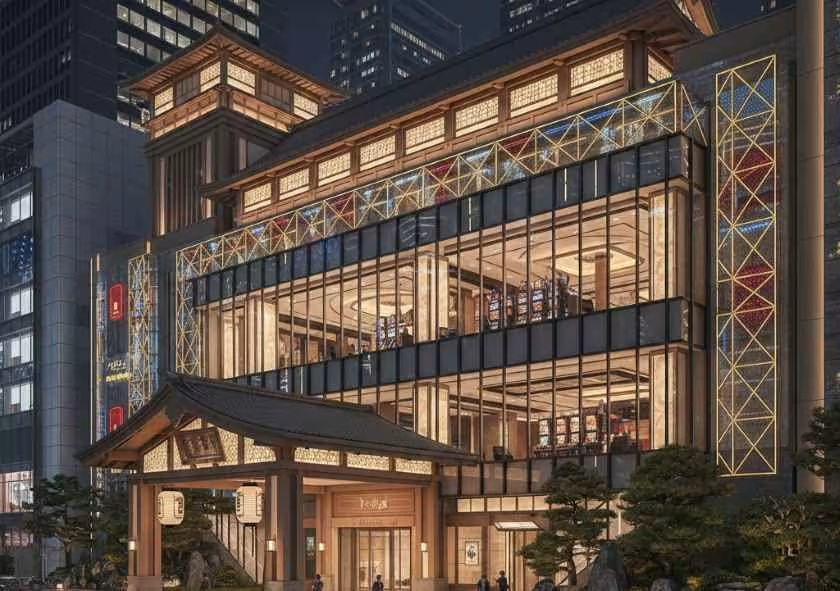
Osaka has positioned itself at the forefront of Japan’s emerging casino resort landscape, signaling a renewed drive to strengthen tourism and regional economic growth. The city’s progress on integrated resort development reflects a broader national strategy to attract high-value international visitors while diversifying revenue streams beyond traditional tourism. By combining gaming with hospitality, conventions, and entertainment, Osaka’s project is being viewed as a blueprint for future developments across the country. For policymakers and investors alike, the initiative represents a critical test of Japan’s ability to balance economic ambition with regulatory discipline and social responsibility.
Osaka Sets the Pace for Integrated Resorts
Osaka’s advancement in integrated resort development marks a significant milestone in Japan’s long-term gaming strategy. The project has moved ahead of other regional proposals, positioning the city as the country’s flagship destination for large-scale casino-led tourism. Authorities see Osaka as uniquely suited to host such a complex, given its infrastructure, international connectivity, and established appeal among foreign travelers.
Tourism Growth at the Core of Strategy
The integrated resort model is designed to extend visitor stays and increase per-capita tourist spending. Beyond gaming floors, the Osaka development emphasizes hotels, convention centers, retail zones, and entertainment venues. This diversified offering is expected to strengthen Japan’s competitiveness in the global tourism market, particularly as neighboring countries continue to expand their own integrated resort ecosystems.
Economic Impact and Investment Outlook
The scale of investment tied to Osaka’s resort is expected to generate substantial economic spillovers. Construction activity, permanent employment, and increased demand for local services are likely to provide long-term benefits to the regional economy. From an investment perspective, the project has renewed global interest in Japan’s tightly regulated but high-potential gaming market.
Regulatory Framework and Social Safeguards
Japanese authorities have maintained a cautious approach to casino development, prioritizing strict oversight and social safeguards. Osaka’s project operates within a comprehensive regulatory framework aimed at preventing excessive gambling and ensuring transparency. The emphasis on responsible gaming is intended to address public concerns while preserving the project’s economic objectives.
A Model for Future Developments
Osaka’s progress is widely seen as a reference point for other regions considering integrated resort bids. The city’s experience highlights the importance of political alignment, local support, and regulatory clarity. As the government prepares to open additional site selection processes, lessons from Osaka are expected to shape policy design and evaluation criteria.
Outlook: Tourism-Led Growth with Measured Expansion
Osaka’s leadership in Japan’s casino resort initiative signals cautious optimism about the sector’s future. While challenges remain, particularly around public acceptance and regulatory execution, the project underscores a strategic shift toward tourism-led growth. If successful, Osaka could redefine Japan’s position in the global travel and entertainment economy, setting the stage for a new chapter in regional development.
Comments