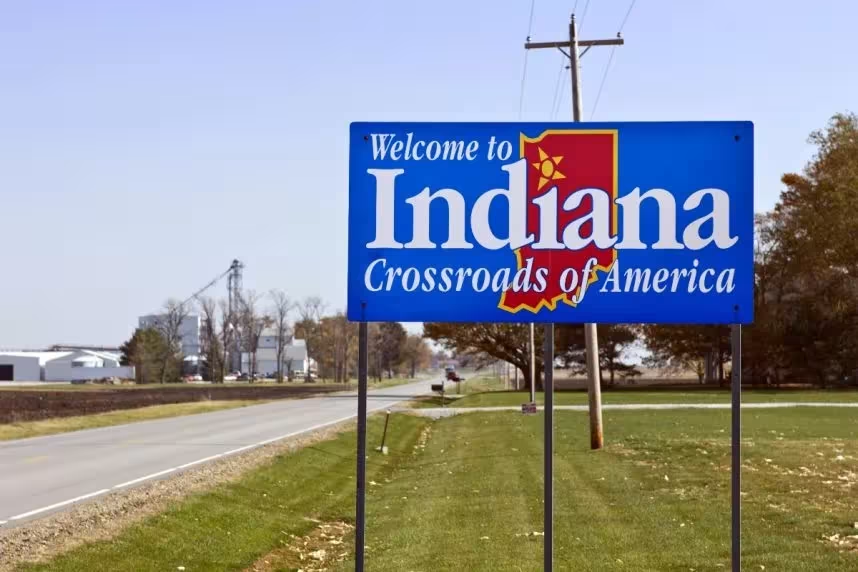
Indiana is facing renewed debate over the expansion of casino gambling as several counties signal interest in hosting new gaming facilities. Local governments view casino development as a potential catalyst for job creation, infrastructure investment, and long-term tax revenue. Supporters argue that expanded gambling could strengthen regional economies and keep consumer spending within state borders, while critics caution against social costs and market saturation. As lawmakers consider whether to revise gaming laws, the growing competition among counties highlights the financial stakes involved and underscores how casino policy has become a broader economic development issue for the state.
Growing Interest From Local Governments
Multiple counties across Indiana have begun positioning themselves as viable locations for potential casino projects. Local officials are emphasizing available land, transportation access, and workforce readiness as competitive advantages.
For many of these regions, a casino is viewed not merely as a gaming venue but as a multipurpose entertainment anchor capable of attracting visitors from neighboring states.
Economic Rationale Behind the Push
County leaders point to the fiscal upside of casino gambling, particularly in the form of licensing fees, gaming taxes, and secondary economic activity. Revenues generated by existing casinos in Indiana already contribute significantly to public services such as education, public safety, and infrastructure.
Proponents argue that expanding the footprint of legalized gambling could spread these benefits more evenly across the state, especially in areas struggling to attract large-scale private investment.
Competition and Market Considerations
The interest from multiple counties also raises questions about market capacity. Analysts note that while demand for gaming and entertainment remains resilient, excessive expansion could dilute revenues and strain existing operators.
Lawmakers are expected to evaluate whether new licenses would complement current casinos or simply redistribute spending rather than generate net economic gains.
Legislative Hurdles and Policy Debate
Any expansion of casino gambling would require legislative approval, making the issue as much political as economic. Lawmakers must balance local development ambitions with statewide concerns, including responsible gaming, regulatory oversight, and long-term fiscal stability.
Previous debates suggest that decisions will hinge on detailed impact studies and revenue projections rather than political pressure alone.
Social Impact and Community Response
Public opinion remains divided. While some communities welcome the prospect of new jobs and development, others worry about increased problem gambling and changes to local character.
Counties seeking consideration have increasingly stressed commitments to responsible gaming programs and community reinvestment as part of their proposals.
Outlook for Indiana’s Gaming Landscape
As Indiana revisits its casino policy, the surge of interest from counties reflects broader shifts in how states view gambling—as a regulated economic tool rather than a marginal industry. Whether lawmakers choose expansion or restraint, the outcome will shape regional development strategies and the competitive dynamics of the Midwest gaming market for years to come.
Comments