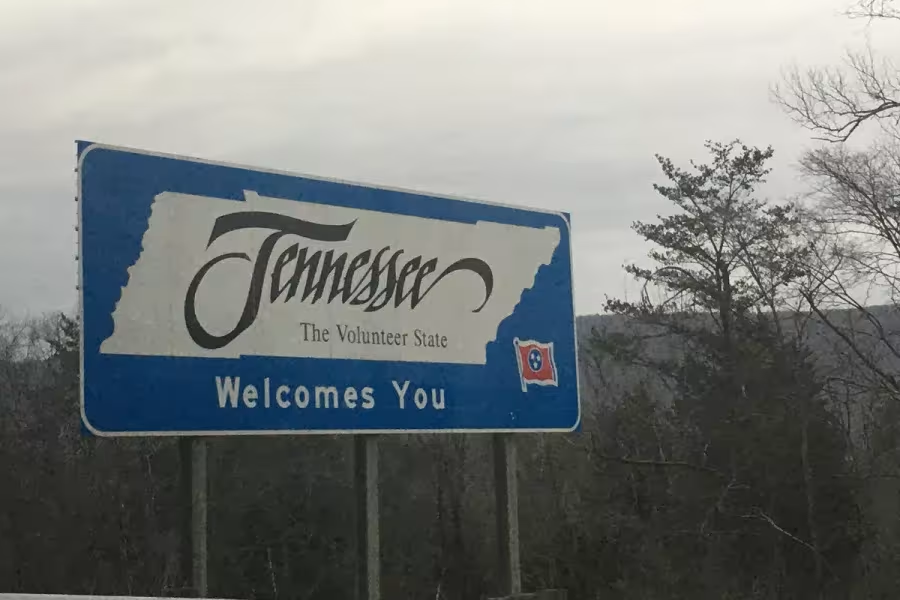
Tennessee has emerged as the latest U.S. state considering a legislative ban on sweepstakes-style online casino platforms, reflecting growing regulatory unease around digital gambling models that operate outside traditional licensing frameworks. Lawmakers and regulators argue that these platforms blur the line between promotional games and real-money gambling, raising concerns over consumer protection, taxation, and regulatory oversight. The proposal signals a broader national shift as states reassess loopholes that have allowed sweepstakes casinos to flourish. For the gaming industry, the move underscores mounting legal risks and the likelihood of stricter enforcement across key U.S. markets.
Tennessee’s Regulatory Push Gains Momentum
State officials in Tennessee are evaluating measures that would prohibit sweepstakes-based online casino operations, a segment that has expanded rapidly in recent years. These platforms typically allow users to play casino-style games using virtual currencies, which can later be redeemed for cash or prizes, a structure regulators increasingly view as a workaround to existing gambling laws.
The proposed ban aims to bring clarity to the state’s gaming framework and prevent unregulated operators from accessing local consumers.
Why Sweepstakes Casinos Are Under Fire
At the heart of the debate is whether sweepstakes casinos effectively constitute real-money gambling. Critics argue that despite their promotional labeling, these platforms replicate the mechanics and risks of traditional online casinos without adhering to licensing, compliance, or responsible gaming standards.
Regulators have also raised concerns about the lack of age verification, transparency, and consumer safeguards, particularly as participation grows among younger and digitally native users.
Implications for the Gaming Industry
If enacted, the Tennessee proposal could disrupt business models that rely on regulatory gray areas. Industry analysts note that a ban would likely force operators to either exit the state or pursue full licensing under more stringent regulatory regimes.
The move may also influence other states evaluating similar legislation, accelerating a nationwide reassessment of sweepstakes-based gaming structures.
Financial and Legal Considerations
From a fiscal perspective, lawmakers argue that unregulated sweepstakes casinos deprive states of potential tax revenue while shifting enforcement and social costs onto public institutions. Legal experts suggest that clearer prohibitions could reduce ambiguity and litigation, providing a more predictable environment for licensed gaming operators.
For investors, the development highlights increasing regulatory risk within segments of the online gaming market.
A Signal of Broader Policy Change
Tennessee’s proposal reflects a wider trend toward tighter oversight of digital gambling formats in the United States. As regulators seek to modernize gaming laws, sweepstakes casinos are facing diminishing tolerance from policymakers.
Whether or not the ban advances, the discussion itself marks a turning point, signaling that regulatory leniency toward alternative online casino models may be nearing its end.
Comments