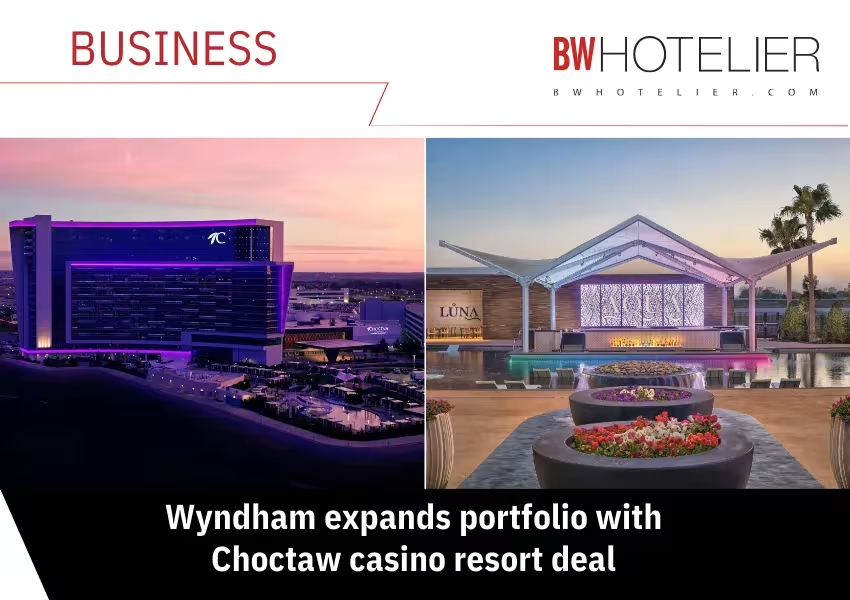
Wyndham Hotels & Resorts has strengthened its presence in the experiential travel segment through a new partnership tied to a Choctaw casino resort development. The move reflects a broader hospitality trend in which global hotel brands align with gaming and entertainment destinations to capture high-spending leisure and event-driven travelers. The agreement expands Wyndham’s branded portfolio while offering the resort operator access to international distribution networks and loyalty programs. Analysts view the deal as a strategic step toward diversifying revenue streams and deepening market penetration in resort-driven tourism, particularly in regions where integrated entertainment complexes are gaining economic and investment momentum.
A Strategic Move Into Experiential Hospitality
Wyndham’s latest expansion underscores how major hotel companies are evolving beyond traditional lodging models. By associating with a large-scale casino resort project linked to the Choctaw Nation, the company positions itself within the fast-growing segment of destination entertainment travel.
Integrated resorts that combine gaming, hotels, retail, dining, and event venues have proven to generate longer guest stays and higher per-visitor spending. For hotel brands, these partnerships offer a way to anchor properties within high-traffic entertainment ecosystems rather than relying solely on transient tourism.
Brand Power Meets Destination Gaming
Under the agreement, Wyndham will bring one of its recognized brands into the resort’s lodging component. The collaboration allows the property to tap into Wyndham’s global reservation systems, marketing reach, and loyalty membership base, which includes millions of travelers worldwide.
For the Choctaw-affiliated resort, brand alignment provides credibility and international visibility, potentially drawing a broader mix of leisure travelers, corporate groups, and convention business.
Such alliances reflect a growing convergence between hospitality operators and gaming enterprises seeking mutual scale advantages.
Revenue Diversification and Stability
Hotel companies have increasingly sought partnerships in entertainment-driven destinations as a hedge against cyclical business travel demand. Casino resorts often benefit from diversified income streams, including gaming, food and beverage operations, live events, and retail experiences.
By integrating into this ecosystem, Wyndham stands to gain more resilient revenue performance. Properties connected to entertainment complexes typically maintain higher occupancy levels during economic fluctuations, supported by regional visitors and event-based demand.
Economic and Community Impact
Large resort developments often serve as economic anchors, generating construction employment, long-term hospitality jobs, and secondary business growth. The Choctaw resort project is expected to stimulate local supply chains, tourism services, and transportation networks.
Additionally, such developments can strengthen regional tourism branding, positioning the destination as more than a gaming venue by offering entertainment, cultural events, and conference facilities.
Competitive Positioning in the Resort Market
The hospitality sector has become increasingly competitive in securing partnerships with large-scale entertainment and gaming destinations. Wyndham’s move helps reinforce its standing among global hotel groups seeking asset-light growth through franchise and management agreements.
This approach allows the company to expand its portfolio without heavy capital expenditure, while benefiting from steady management or franchise fees linked to property performance.
Industry Trends Favor Integrated Resorts
Across North America and other regions, integrated resort models continue to gain investor interest. Travelers are increasingly drawn to destinations that offer multiple experiences within a single property, from luxury accommodations to nightlife and large-scale entertainment events.
Hospitality brands that align with these complexes are better positioned to capture evolving consumer preferences centered on convenience and experiential value.
Outlook for Future Expansion
The Choctaw casino resort partnership signals Wyndham’s intent to pursue further opportunities in the entertainment-led hospitality segment. As travel demand increasingly favors immersive and multi-purpose destinations, hotel groups are expected to deepen relationships with gaming and leisure developers.
While execution risks remain, including regulatory oversight and market competition, the long-term trajectory suggests sustained growth potential for hospitality brands embedded in integrated resort ecosystems.
Wyndham’s latest deal reflects a calculated step toward strengthening its global relevance in a travel industry increasingly shaped by experience-driven demand.
Comments