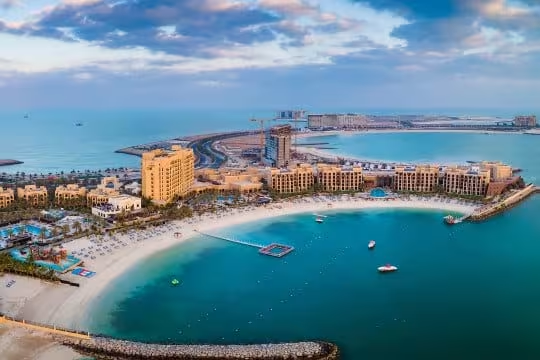
Ras Al Khaimah is moving forward with plans to develop the United Arab Emirates’ first integrated casino resort, seeking expertise from established gaming operators in Hong Kong. The initiative marks a significant shift in the region’s tourism and entertainment strategy, signaling a willingness to explore regulated gaming as a tool for economic diversification. Authorities are positioning the project as part of a broader push to attract international visitors, increase foreign investment, and expand non-oil revenue streams. Industry analysts say the development could redefine the Gulf’s hospitality landscape while introducing strict oversight frameworks to balance economic opportunity with regulatory and cultural considerations.
A Strategic Pivot in Tourism Development
Ras Al Khaimah’s pursuit of an integrated resort featuring regulated gaming represents a notable evolution in the emirate’s long-term economic planning. Traditionally known for its natural landscapes and heritage tourism, the emirate is now aligning itself with global hospitality trends that blend luxury accommodation, entertainment, retail, and conference infrastructure under one destination model.
By engaging experienced operators from Hong Kong — a global hub for casino management expertise — Ras Al Khaimah aims to ensure operational credibility and international standards in gaming regulation, security, and compliance.
Economic Diversification at the Core
The UAE has steadily prioritized economic diversification, reducing reliance on hydrocarbon revenues in favor of tourism, logistics, technology, and financial services. Integrated resorts have proven effective in other jurisdictions as catalysts for job creation, infrastructure investment, and sustained visitor inflows.
Economists suggest that a well-regulated gaming component could significantly boost tourism receipts, particularly from high-spending international travelers. Beyond direct gaming revenues, spillover effects are expected across hospitality, aviation, retail, and event management sectors.
Regulatory Framework and Oversight
Any casino development in the UAE would operate under a carefully structured regulatory framework. Authorities are expected to introduce licensing controls, financial transparency requirements, and strict responsible-gaming measures to ensure social safeguards remain in place.
Drawing expertise from mature gaming markets such as Hong Kong could help establish best practices in compliance, anti-money laundering protocols, and digital monitoring systems. Such safeguards are considered essential in balancing commercial objectives with regional sensitivities.
Regional and Global Market Implications
If completed, the resort would position Ras Al Khaimah as a pioneering destination within the Middle East’s evolving entertainment economy. Analysts believe the move could prompt broader discussions across the region about the role of integrated resorts in tourism competitiveness.
International investors are closely monitoring the project, viewing it as a potential gateway for future hospitality and leisure investments in the Gulf. The development may also strengthen air connectivity and global branding efforts for the emirate.
Long-Term Vision for the Hospitality Sector
Beyond gaming, the project is envisioned as a multi-faceted tourism hub, incorporating luxury hotels, convention centers, fine dining, and live entertainment venues. Such integrated developments are designed to drive year-round visitation rather than seasonal tourism spikes.
As global travel demand continues to recover and diversify, destinations offering comprehensive entertainment ecosystems are increasingly outperforming traditional resort models. Ras Al Khaimah’s initiative signals a strategic commitment to positioning itself among these next-generation tourism hubs.
The proposed partnership with Hong Kong gaming expertise reflects a pragmatic approach: leveraging international experience while crafting a regulatory model tailored to local conditions. If executed successfully, the project could become a landmark moment in the UAE’s broader economic transformation and hospitality evolution.
Comments