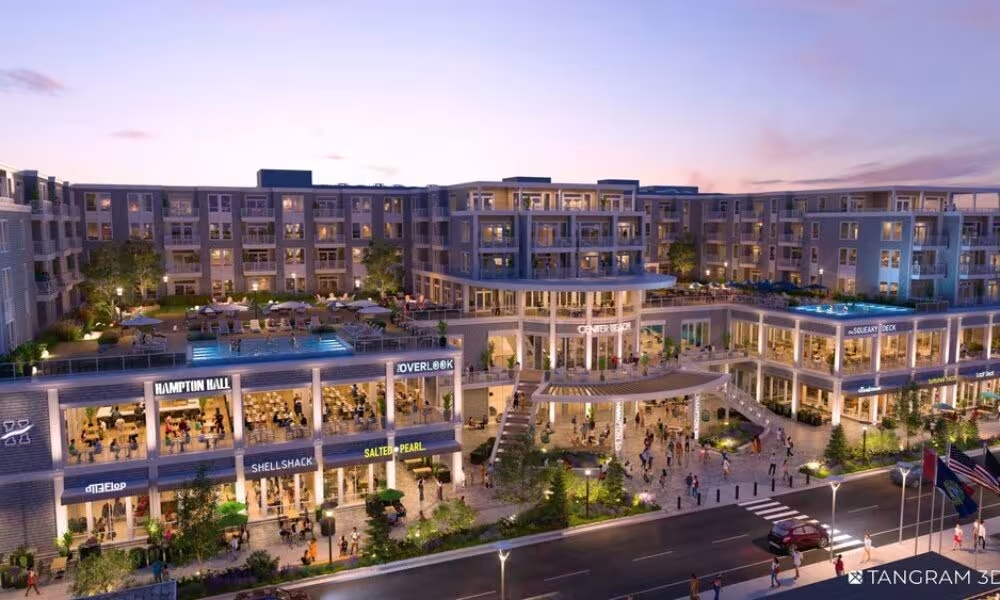
A sweeping Rs.600 million redevelopment plan aims to reshape New Hampshire’s Hampton Beach waterfront with a modern hotel, casino and mixed-use entertainment complex. The project will replace the longstanding Hampton Beach Casino property with a climate-resilient structure designed to address rising sea levels while preserving the historic legacy of the Casino Ballroom. Developers say the investment will nearly double the venue’s capacity and position the coastal destination as a year-round tourism hub rather than a seasonal attraction. If approved, the initiative could mark one of the most significant private investments in the region’s recent history.
A Landmark Transformation on Ocean Boulevard
The redevelopment proposal centers on the site of the historic Hampton Beach Casino, located at 169 Ocean Blvd. The aging structure is expected to be demolished to make way for a mixed-use complex featuring a luxury hotel, a modernized casino facility, residential condominiums and an expanded entertainment venue.
The project is being advanced by Lupoli Companies in partnership with property owner Fred Schaake. Developers estimate total capital expenditure at approximately Rs.600 million, underscoring the scale and ambition of the undertaking.
The proposed design seeks to balance modernization with historical continuity. Central to the plan is the preservation and enhancement of the Casino Ballroom, a cultural fixture known for hosting nationally recognized performers for decades.
Expanding Capacity and Modernizing Infrastructure
One of the project’s core features is a near doubling of the Casino Ballroom’s seating capacity. The expansion is intended to attract higher-profile events and extend programming beyond the traditional summer tourism window.
Developers argue that modern infrastructure is essential not only for entertainment growth but also for public safety and environmental resilience. The new complex is being engineered to withstand projected sea-level rise and coastal storm surges — a significant consideration for waterfront properties in New England.
Architectural plans incorporate elevated structures, reinforced foundations and updated drainage systems. These measures are designed to ensure long-term operational viability in a region increasingly affected by climate variability.
Economic Implications for Hampton
Proponents frame the redevelopment as a generational opportunity for the town of Hampton. Beyond construction employment, the completed project is expected to generate permanent jobs across hospitality, gaming, food service and property management sectors.
Local officials have indicated that expanded year-round operations could stabilize revenue streams traditionally tied to peak summer months. By incorporating hotel accommodations and residential units, the development seeks to diversify the economic base and encourage off-season visitation.
The influx of private capital may also stimulate ancillary investment along Hampton Beach’s commercial corridor, potentially upgrading surrounding retail and dining establishments.
Balancing Heritage and Progress
In planning submissions to local authorities, developers emphasized respect for the historical significance of the Casino Ballroom while positioning the redevelopment as a transformative civic investment.
The challenge lies in reconciling nostalgia with modernization. Hampton Beach has long served as a seasonal retreat marked by boardwalk charm and legacy venues. Transitioning toward a luxury, multi-use complex represents a strategic shift in brand positioning.
Urban development analysts note that such transitions can redefine regional tourism markets. When executed effectively, large-scale hospitality investments elevate destination appeal and attract broader demographic segments. However, success depends on integration with local identity rather than displacement of it.
Regulatory Review and Next Steps
The proposal is currently undergoing evaluation by the Hampton Planning Board. Key considerations include zoning compliance, environmental safeguards, traffic management and community impact.
Public input will likely shape final design elements. Coastal redevelopment projects often invite scrutiny regarding density, infrastructure strain and aesthetic compatibility.
If approved, construction timelines and phased implementation plans are expected to follow, with developers aiming to minimize disruption during peak tourism seasons.
Strategic Outlook
The Rs.600 million Hampton Beach redevelopment reflects broader trends in coastal real estate investment: consolidation of entertainment assets, vertical integration of hospitality offerings and climate-adaptive construction.
Should the project proceed as envisioned, it may redefine Hampton Beach from a primarily seasonal attraction into a resilient, diversified leisure destination. For investors, it represents confidence in experiential tourism. For residents, it signals both opportunity and change.
Ultimately, the initiative illustrates how legacy entertainment properties can evolve to meet modern economic and environmental realities — transforming a storied venue into a forward-looking coastal landmark.
Comments