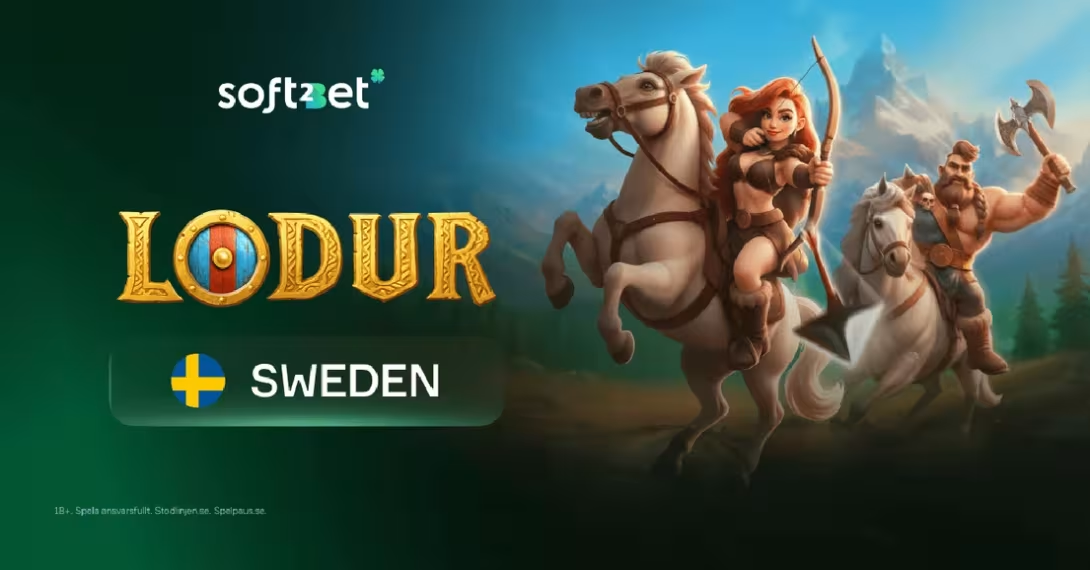
Soft2Bet has launched Lodur, a Viking-inspired online casino and sportsbook tailored specifically for the Swedish market. The new brand blends Norse mythology aesthetics with localized payment solutions, sports coverage and live casino experiences designed for Swedish players. A standout feature is its “Island system,” a persistent progression model integrating social casino mechanics and competitive player-versus-player simulations. The launch underscores Soft2Bet’s strategy of combining gamification with localized user experiences to deepen engagement and retention in regulated European markets, positioning Lodur as a differentiated entrant in Sweden’s competitive digital gaming landscape.
Strategic Entry into the Swedish Market
Soft2Bet has introduced Lodur as a new online casino and sportsbook platform engineered for Sweden’s regulated iGaming environment. The launch reflects a deliberate localization strategy rather than a generic cross-border rollout.
Sweden remains one of Europe’s more mature and tightly regulated online gaming markets. Operators must differentiate through user experience, product innovation and compliance discipline. Lodur’s design emphasizes cultural alignment, drawing heavily from Viking heritage and Norse mythology to create a brand identity resonant with local players.
The approach illustrates Soft2Bet’s broader European expansion blueprint: enter regulated markets with customized, engagement-focused platforms rather than standardized offerings.
Localization as Competitive Advantage
Localization extends beyond thematic branding. Lodur integrates Swedish-preferred payment methods, enabling frictionless transactions aligned with domestic banking norms. The sportsbook component prioritizes sporting events most followed by Swedish audiences, ensuring relevance within a crowded betting landscape.
Additionally, the platform offers localized live slots and dealer experiences optimized for both desktop and mobile interfaces. By tailoring language, presentation style and content mix, the operator seeks to create familiarity from the first user interaction.
In regulated markets, such granular localization often determines customer acquisition efficiency and long-term retention.
Gamification Through the Island System
The defining innovation of Lodur is its Island system, a persistent progression feature that extends beyond individual gaming sessions. Unlike traditional online casinos, where engagement resets with each visit, Lodur introduces a continuous development layer.
Players build and upgrade a virtual island settlement while participating in casino and sports betting activities. Resources earned through gameplay can be reinvested into constructing buildings and expanding capabilities within the digital environment.
This mechanic draws from social gaming frameworks, embedding long-term goals into short-term wagering activity. Each structural upgrade unlocks new progression paths, effectively blending entertainment with strategic advancement.
Competitive Dynamics and PvP Simulation
Beyond passive progression, Lodur incorporates a player-versus-player simulation model. Participants can challenge other players’ islands, defend their own settlements and refine strategic tactics as they grow.
The absence of a defined endpoint transforms the platform into an ongoing competitive ecosystem. Building, raiding and upgrading form a cyclical loop designed to sustain engagement over extended periods.
Such gamification elements reflect broader industry trends, where operators increasingly leverage behavioral design principles to deepen player involvement while maintaining compliance with responsible gaming standards.
Market Context and Industry Implications
Sweden’s iGaming market is characterized by high digital adoption, stringent licensing requirements and sophisticated consumer expectations. Operators entering this environment must balance innovation with regulatory adherence.
Soft2Bet’s Lodur launch illustrates how thematic storytelling combined with technological gamification can create differentiated positioning. In competitive European jurisdictions, engagement depth often matters as much as promotional incentives.
From a commercial perspective, progression-based systems may enhance customer lifetime value by encouraging repeat visits and sustained participation.
Financial and Strategic Outlook
While financial projections for Lodur have not been disclosed, new market entries typically aim to capture incremental share through differentiated user experience rather than aggressive pricing strategies alone.
The integration of social mechanics into real-money gaming environments suggests a strategic focus on hybrid engagement models. Such models can potentially stabilize revenue by fostering habitual usage patterns.
Soft2Bet’s investment in localized innovation indicates confidence in Sweden’s regulatory stability and long-term growth potential.
Conclusion
The introduction of Lodur marks a calculated evolution in Soft2Bet’s European growth strategy. By merging Norse cultural identity with advanced gamification architecture, the company seeks to redefine player engagement in Sweden’s competitive online casino and sportsbook sector.
In an industry increasingly shaped by digital sophistication and behavioral design, platforms that offer continuous progression and localized authenticity may command strategic advantage.
As regulated markets mature, differentiation through immersive user experiences rather than mere promotional scale appears poised to shape the next chapter of Europe’s iGaming expansion narrative.
Comments