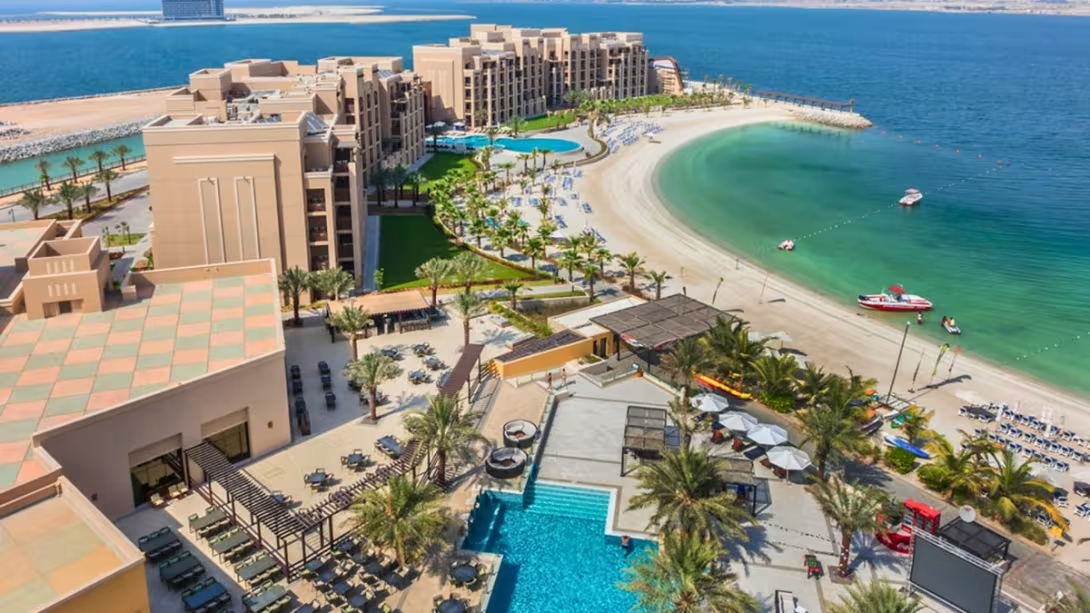
Ras Al Khaimah, long overshadowed by its glitzy neighbors, is on the brink of a historic transformation. The emirate welcomed 1.28 million visitors in 2024, yet projections indicate arrivals could surge to 5.5 million annually by 2030. The catalyst is the Rs. 42,000 crore Wynn Al Marjan Island resort, scheduled to open in spring 2027 as the United Arab Emirates’ first fully legal casino destination. Developed at a cost of $5.1 billion, the integrated resort represents more than a gaming venture — it is a strategic economic pivot designed to reposition Ras Al Khaimah as a global tourism and investment powerhouse.
Ras Al Khaimah’s Quiet Rise
Ras Al Khaimah, the northernmost emirate of the United Arab Emirates, has historically maintained a modest tourism profile. Located roughly 90 minutes by road from Dubai, it was often perceived as a tranquil retreat rather than a headline destination.
In 2024, Ras Al Khaimah recorded 1.28 million visitors — a respectable figure, yet modest compared with Dubai’s multi-million annual arrivals. For years, the emirate focused on eco-tourism, heritage sites and adventure travel. While these initiatives strengthened its brand as a nature-oriented getaway, they did not fundamentally alter its economic trajectory.
That is now poised to change.
The Rs. 42,000 Crore Catalyst
The centerpiece of Ras Al Khaimah’s ambition is Wynn Al Marjan Island, an integrated resort valued at $5.1 billion — approximately Rs. 42,000 crore at prevailing exchange rates. Slated for launch in spring 2027, it will become the UAE’s first fully licensed casino resort, marking a landmark policy shift in a region traditionally cautious about gaming.
The scale of investment signals more than architectural grandeur. It reflects strategic intent. Integrated resorts of this magnitude are designed to function as economic ecosystems, combining gaming floors, luxury hotels, convention facilities, retail spaces and fine dining under one roof.
Global gaming operator Wynn Resorts brings brand equity and operational expertise cultivated in Las Vegas and Macau. Its entry into Ras Al Khaimah underscores the emirate’s determination to compete on an international stage.
Tourism Surge: From 1.28 Million to 5.5 Million
Forecasts projecting 5.5 million annual visitors by 2030 represent a more than fourfold increase from 2024 levels. Unlike previous tourism spikes driven by mega-events or expos, this growth is expected to be structural rather than episodic.
Integrated resorts generate sustained footfall by attracting high-net-worth individuals, conference delegates and leisure travelers simultaneously. The multiplier effect extends beyond gaming revenue, stimulating demand for airlines, hospitality suppliers, real estate and ancillary services.
For Ras Al Khaimah, the projected surge could translate into billions of dirhams in incremental GDP contribution. The emirate’s hospitality inventory, transport infrastructure and urban planning frameworks are already being recalibrated to accommodate anticipated demand.
Economic Diversification and Identity Shift
For decades, the UAE’s economic narrative has centered on Dubai’s commercial dynamism and Abu Dhabi’s hydrocarbon wealth. Ras Al Khaimah, by contrast, cultivated a reputation for manufacturing, ceramics and low-density tourism.
The casino resort marks a pivot toward high-value experiential tourism. It aligns with broader Gulf diversification strategies aimed at reducing reliance on oil revenues and expanding private-sector participation.
More profoundly, Wynn Al Marjan Island signals a recalibration of the emirate’s global identity. What was once viewed as a quiet neighbor may soon be recognized as a regulated gaming jurisdiction in the Middle East — a distinction with far-reaching geopolitical and economic implications.
Regulatory Evolution and Regional Implications
The introduction of legal casino gaming in the UAE represents a measured but notable regulatory evolution. Authorities have established a framework to oversee licensing and compliance, aiming to balance economic opportunity with social safeguards.
Regional observers are closely monitoring the development. Should the project deliver projected economic returns without significant social disruption, it may encourage further controlled liberalization within the hospitality and entertainment sectors.
However, the success of such ventures hinges on disciplined governance, robust compliance mechanisms and sustained global marketing.
A High-Stakes Transformation
Wynn Al Marjan Island is not merely a hospitality development; it is a strategic wager on Ras Al Khaimah’s future. With Rs. 42,000 crore committed to a single integrated resort, the emirate is signaling confidence in its ability to redefine itself within a competitive regional landscape.
If projections materialize, the transformation will be dramatic — from 1.28 million visitors to 5.5 million within six years, reshaping employment, infrastructure
Comments