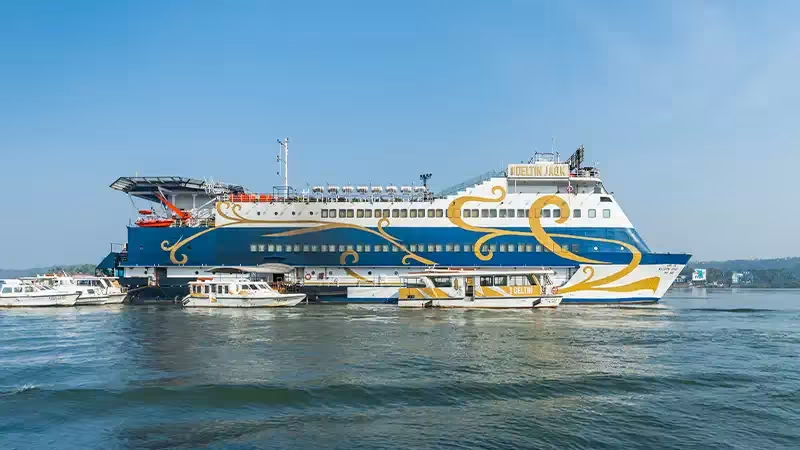
A fresh legal confrontation is unfolding in Goa as activists and residents prepare to challenge regulatory approvals granted to a 112-meter offshore casino vessel operated by Delta Corp. The proposed ship, expected to operate on the Mandovi River, has drawn criticism over its scale and potential environmental consequences. A writ petition is being drafted for submission before the Bombay High Court, questioning the legitimacy and transparency of the permissions issued. Civic groups argue the vessel’s capacity could equal that of Goa’s five existing offshore casinos combined, intensifying concerns over ecological stress, urban congestion and the long-term sustainability of river-based gaming operations.
Legal Challenge Takes Shape
Delta Corp is facing mounting scrutiny as legal action is readied against approvals granted for its new offshore casino cruise ship in Goa. The 112-meter-long vessel, slated to operate on the Mandovi River, has become the focal point of a widening civic and environmental debate.
According to individuals involved in the initiative, a team of lawyers working on a pro bono basis is finalizing a writ petition to be filed before the Bombay High Court. The petition will reportedly question the procedural and regulatory clearances issued for the vessel’s deployment.
Former Allahabad High Court Chief Justice Ferdino Rebello has indicated that the review process uncovered what he described as “very disturbing” aspects related to the approvals. Petitioners intend to place these findings before the court and seek interim relief once proceedings commence.
Capacity Concerns and Environmental Pressure
At the heart of the controversy lies the vessel’s projected capacity. According to Rebello, the new casino ship could accommodate volumes comparable to the combined capacity of Goa’s five existing offshore casinos. If accurate, such expansion would significantly alter the scale of river-based gaming activity in the state.
The Mandovi River has long hosted floating casinos under a regulated licensing framework. However, critics argue that increasing vessel size and passenger throughput could intensify environmental stress on an already sensitive ecosystem. Concerns range from waste management and water pollution to navigational congestion and shoreline erosion.
Residents from Panaji and Reis Magos are expected to join the legal challenge, reflecting localized anxiety over traffic, infrastructure strain and the cumulative impact of tourism-heavy development.
Civic Opposition Gains Momentum
The proposed litigation is also backed by activists associated with the “Enough is Enough” movement, a Goa-based civic campaign advocating stricter limits on offshore casinos. The group has consistently argued that river-based gaming operations exceed the region’s ecological carrying capacity.
A recently submitted charter to the Goa state government has called for the phased removal of offshore casinos within six months, citing sustainability and environmental management concerns. While state authorities have not formally responded to that demand, the impending writ petition raises the stakes considerably.
The legal strategy appears aimed not only at halting the immediate deployment of the vessel but also at reopening the broader policy debate surrounding offshore casino licensing.
Economic Stakes and Regulatory Balance
Goa’s offshore casino industry contributes significantly to tourism revenue and employment, forming a distinct segment of the state’s entertainment economy. Delta Corp, one of India’s largest gaming operators, maintains that its operations comply with prevailing regulatory norms.
Yet the dispute underscores a recurring tension in high-growth tourism markets: balancing economic expansion with environmental stewardship. Infrastructure limits, ecological fragility and urban density constraints complicate decision-making in regions dependent on both natural beauty and commercial activity.
Should the court grant interim relief, the timeline for the vessel’s launch could be delayed, introducing uncertainty into Delta Corp’s operational planning and revenue projections.
A Precedent in the Making
The case could carry implications beyond a single vessel. If the Bombay High Court subjects the approvals process to rigorous judicial scrutiny, it may establish precedent for future licensing decisions in environmentally sensitive zones.
For policymakers, investors and civic groups alike, the unfolding legal battle represents more than a dispute over a ship’s dimensions. It reflects a deeper conversation about development priorities, governance transparency and the long-term viability of river-based casino operations in Goa.
As the writ petition nears filing, all eyes turn to the judiciary. The outcome may well determine not only the fate of a 112-meter casino cruise ship, but also the contours of Goa’s tourism-driven economy in the years ahead.
Comments