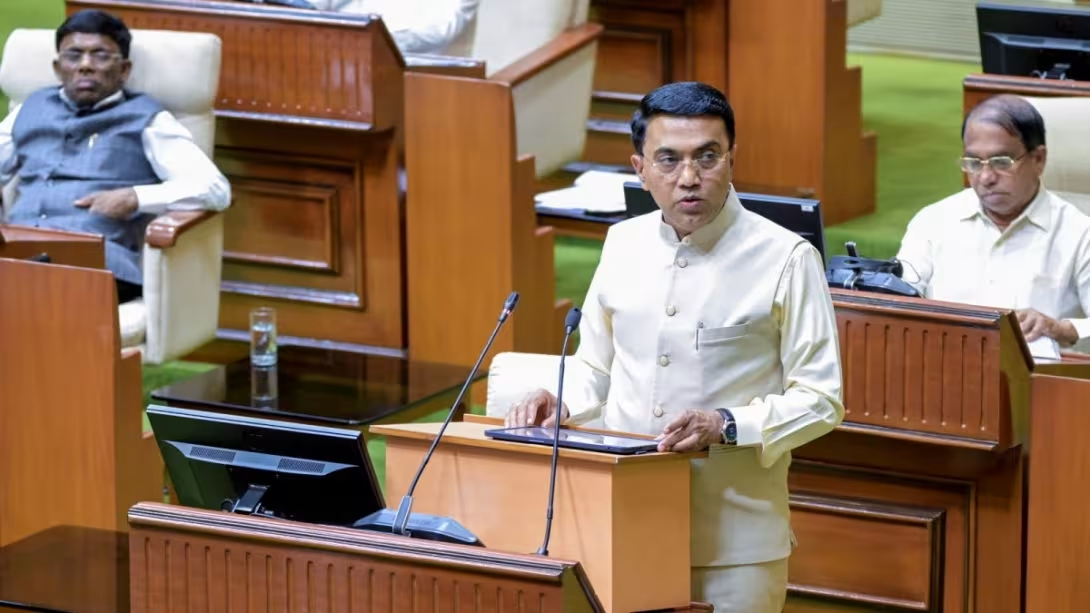
The cost of establishing casino-linked hospitality businesses in Goa is set to rise as the state government proposes higher licensing fees within the excise framework. Under the new proposal presented by the chief minister, entrepreneurs seeking a fresh excise licence to operate liquor-serving establishments such as restaurants and bars will need to pay Rs. 20 lakh. Meanwhile, the fee for transferring an existing excise licence without inheritance is expected to increase to Rs. 25 lakh. The move signals a broader regulatory push aimed at strengthening oversight of Goa’s lucrative gaming and tourism economy while ensuring higher revenue generation for the state treasury.
Rising Costs for Hospitality and Casino-Linked Businesses
Goa’s government is moving to tighten financial and regulatory requirements for businesses operating in the state’s thriving gaming and hospitality sector. In a recent policy proposal, the chief minister announced a significant revision of excise licensing fees that directly affects entrepreneurs seeking to establish or acquire liquor-serving establishments.
Under the proposal, the cost of obtaining a new excise licence for operating a restaurant or liquor shop will be set at Rs. 20 lakh. These establishments often serve as key components of the broader casino and tourism ecosystem, particularly in a state where nightlife, entertainment and gaming remain central to visitor experiences.
Industry observers note that the revised fee structure reflects the government’s attempt to regulate the rapid expansion of hospitality businesses while ensuring that operators entering the market possess sufficient financial capacity.
Higher Charges for Licence Transfers
In addition to the increase in fresh licensing costs, the government has also proposed a steep revision in the fee required for transferring an existing excise licence when inheritance is not involved.
According to the proposal, the transfer fee will rise to Rs. 25 lakh. Such transfers typically occur when ownership of an establishment changes through sale or business restructuring. The higher fee aims to bring greater transparency and control to the transfer process, which has historically been an area of administrative scrutiny.
Officials believe the revised fee could discourage speculative trading of licences while ensuring that only serious investors participate in the sector.
Strengthening Revenue Streams for the State
The gaming and hospitality industries represent an important pillar of Goa’s economy. Casinos, nightlife venues and restaurants collectively attract millions of tourists each year, contributing significantly to the state’s revenue base.
By revising excise fees, the government aims to strengthen its fiscal position while maintaining regulatory oversight of a rapidly expanding sector. Licensing revenue collected from hospitality establishments forms a meaningful component of the state’s non-tax income.
Economic analysts suggest that the revised structure could generate additional funds that may be directed toward public infrastructure, tourism development and regulatory enforcement.
Impact on the Casino Ecosystem
Although the proposed changes primarily focus on excise licensing for liquor-serving establishments, the policy has broader implications for Goa’s casino industry.
Casinos often operate alongside bars, restaurants and entertainment venues that rely on excise licences. As a result, higher licensing costs may indirectly influence the operational budgets of casino operators and hospitality entrepreneurs.
However, industry experts argue that the increased fees are unlikely to deter large investors, given the strong profitability and steady tourist inflow associated with Goa’s gaming sector.
Balancing Regulation and Economic Growth
The government’s proposal reflects a broader strategy to balance economic expansion with tighter regulatory control. Goa’s tourism-driven economy has experienced sustained growth in entertainment and nightlife businesses, prompting policymakers to reassess licensing norms.
By increasing entry costs and transfer fees, the administration appears focused on promoting responsible business practices and discouraging speculative activity within the hospitality sector.
If implemented effectively, the revised framework could strengthen governance standards while preserving Goa’s reputation as one of India’s most vibrant tourism and gaming destinations.
Conclusion
The proposed increase in excise licensing fees marks a significant policy shift for Goa’s hospitality and casino-linked business environment. With new licences priced at Rs. 20 lakh and transfer fees rising to Rs. 25 lakh, the government is clearly signaling a stronger regulatory stance.
While the move raises entry barriers for new entrepreneurs, it also reflects an effort to ensure that the industry remains financially robust, transparent and capable of contributing to the state’s long-term economic development. As Goa continues to position itself as a premier gaming and tourism hub, regulatory adjustments such as these will likely play a crucial role in shaping the sector’s future trajectory.
Comments