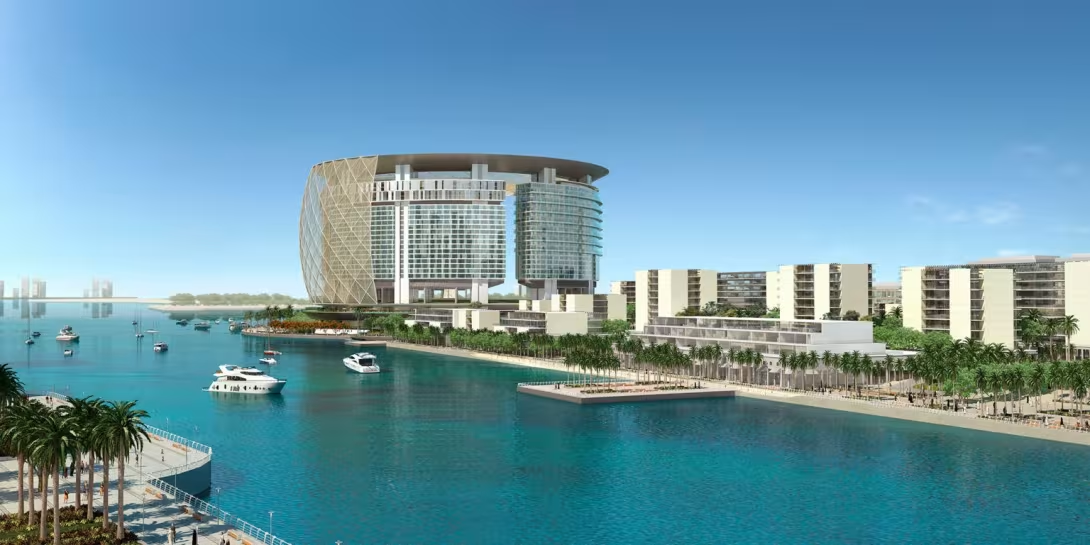
MGM Resorts International is positioning its upcoming luxury beachfront resort in Dubai as a potential gateway to the region’s emerging gaming market. While the development is currently planned as a non-gaming property, company leadership has acknowledged that the project could serve as a strategic platform for a future casino if regulations permit. The multi-billion-dollar project, being developed by Wasl Hospitality, is expected to be completed by 2028. As the UAE gradually establishes a regulatory framework for commercial gaming, global operators are carefully positioning themselves to capture long-term opportunities in the Gulf’s rapidly expanding tourism economy.
MGM Resorts Positions Dubai Project for Long-Term Growth
Global casino operator MGM Resorts International is taking a strategic, long-term approach to its major hospitality development in Dubai.
Speaking at an industry forum focused on strategic growth and innovation, CEO Bill Hornbuckle indicated that the company views the Dubai project as more than just a luxury resort. Although the property will initially operate without gaming facilities, it could eventually serve as a platform for a casino should the regulatory environment in the UAE evolve.
For now, the company is focused on its management agreement for the development, which executives describe as an important extension of the MGM brand into one of the world’s fastest-growing tourism destinations.
A Multi-Billion-Dollar Luxury Development
The ambitious resort complex carries an estimated development value exceeding Rs.2 billion. The project is not being financed directly by MGM but is instead being developed by Wasl Hospitality, a major real estate and hospitality arm linked to the Dubai government.
Under the arrangement, MGM Resorts will manage the property and contribute its globally recognized hospitality brands to the development.
The project will feature multiple luxury hotel towers representing three flagship MGM brands:
Bellagio
ARIA
MGM Grand
These hotels are expected to anchor a large beachfront complex that will also include entertainment venues, restaurants, retail spaces and high-end leisure facilities.
Originally planned for an earlier opening, the development timeline has been revised. Construction remains on track, with completion now expected during the third quarter of 2028.
Dubai’s Ruling Authority Holds the Key to Casino Approval
Despite speculation about future gaming opportunities, executives have emphasized that any decision to allow casino operations will ultimately depend on government approval.
According to Bill Hornbuckle, the property owner is closely tied to the ruling leadership in Dubai. As a result, the authority to approve gaming operations would rest with the emirate’s leadership.
This structure reflects the UAE’s broader approach to gaming regulation, where decisions regarding licensing and policy remain under strict governmental oversight.
At present, the Dubai development is officially categorized as a non-gaming resort, emphasizing luxury tourism rather than casino entertainment.
Competition Emerges as Wynn Prepares First UAE Casino
While MGM’s Dubai property remains gaming-free for now, the broader UAE hospitality landscape is rapidly evolving.
Wynn Resorts is currently developing the country’s first integrated casino resort at Al Marjan Island in the emirate of Ras Al Khaimah.
The project, known as the Wynn Al Marjan Island, is expected to open in 2027 and will feature a licensed casino alongside luxury hospitality, entertainment and retail offerings.
Industry analysts view this project as a landmark development that could establish the regulatory and economic foundation for future gaming expansion across the UAE.
Potential One-License-Per-Emirate Model
Market observers believe that UAE regulators may eventually adopt a limited licensing model for casino operations.
Under one scenario widely discussed by analysts, each emirate could issue a single casino license to control market growth while maximizing tourism value.
If such a framework emerges, MGM Resorts International could be well positioned to secure a license in Dubai due to its existing resort infrastructure and strong brand presence.
This strategy would mirror successful models used in other regulated gaming markets where governments limit the number of integrated resorts to maintain exclusivity and high investment standards.
Strategic Importance of the UAE Gaming Market
The Gulf region is increasingly viewed as a major frontier for global hospitality and gaming companies.
The United Arab Emirates already attracts millions of international visitors each year thanks to its aviation connectivity, luxury tourism offerings and global business hubs.
If casino gaming becomes more widely permitted, the country could emerge as a new global entertainment destination comparable to established gaming hubs in Asia and North America.
For companies like MGM Resorts International, securing an early foothold in the UAE market could provide a long-term competitive advantage.
Conclusion
The Dubai resort project represents a strategic investment for MGM Resorts International as it expands its presence in the Middle East’s luxury tourism sector.
Although the development will initially operate without gaming facilities, the project’s scale, brand portfolio and prime location position it as a potential candidate for a future casino license should regulatory conditions evolve.
With the launch of Wynn Al Marjan Island expected in 2027 and increasing interest from international operators, the UAE appears to be entering a transformative period for its hospitality and entertainment industries.
Whether Dubai eventually joins the emerging casino landscape will ultimately depend on regulatory decisions—but global investors are already preparing for that possibility.
Comments