United States is experiencing a rapid surge in gambling activity, fueled by the widespread adoption of mobile betting platforms and online gaming applications. Consumer spending in the sector has risen sharply over the past year, making it one of the fastest-growing discretionary categories. While this expansion is contributing to economic activity and industry revenues, it also raises serious concerns about personal financial health. Experts warn that the convenience and accessibility of digital gambling are encouraging higher spending and risk-taking behavior, creating a complex landscape where economic growth is increasingly intertwined with consumer vulnerability.
Gambling Emerges as a High-Growth Spending Category
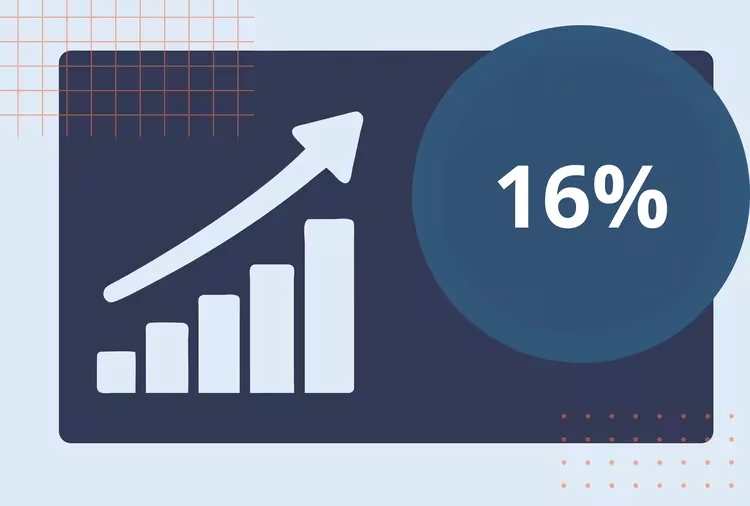
Recent financial data reveals a significant uptick in gambling expenditures across the United States. Over a 12-month period ending in February, consumer spending on gambling increased by approximately 16 percent, positioning it among the fastest-growing segments in discretionary spending.
This trend signals a notable shift in consumer priorities, with gambling increasingly viewed as a mainstream form of entertainment. What was once a relatively niche activity has expanded rapidly, capturing a larger share of household spending.
Digital Platforms Transform Accessibility
The surge in gambling activity is closely linked to the rise of mobile technology. Smartphones and digital applications have effectively removed traditional barriers, allowing users to engage in betting activities anytime and anywhere.
Online sports betting platforms, casino-style apps, and digital lottery services have collectively reshaped the industry landscape. Their user-friendly interfaces and real-time engagement features have broadened participation, attracting both seasoned players and new entrants.
Economic Implications and Industry Momentum
The rapid growth of gambling spending is contributing to the broader economy by generating substantial revenue for operators and related sectors. As the industry expands, it is becoming an increasingly important component of the entertainment and digital services ecosystem.
This momentum is further supported by evolving regulatory frameworks across various jurisdictions, which have enabled the legal expansion of online betting markets. As a result, the sector continues to attract investment and innovation.
Financial Risks and Consumer Concerns
Despite its economic benefits, the surge in gambling activity has raised alarms among financial experts. The ease of access provided by mobile platforms is encouraging more frequent betting, increasing the risk of financial strain for consumers.
Analysts caution that the integration of gambling into everyday digital behavior may lead to excessive spending, reduced savings, and higher levels of personal debt. These risks are particularly pronounced among younger and digitally active demographics.
Behavioral Shifts in Modern Consumption
The growth of gambling reflects broader changes in consumer behavior, where digital engagement and instant gratification play a central role. Advanced algorithms, personalized promotions, and gamified experiences are designed to sustain user interest and increase spending.
This evolution has blurred the line between entertainment and financial decision-making, making it more challenging for individuals to manage their spending responsibly.
Outlook: Navigating Growth and Responsibility
Looking ahead, the challenge for stakeholders in the United States will be to balance the economic advantages of a growing gambling sector with the need for consumer protection.
Regulators, financial institutions, and industry operators must work collaboratively to implement safeguards, promote responsible gaming, and ensure long-term sustainability. While the sector’s growth trajectory remains strong, its future will depend on addressing the financial risks associated with increased accessibility and digital integration.
Comments