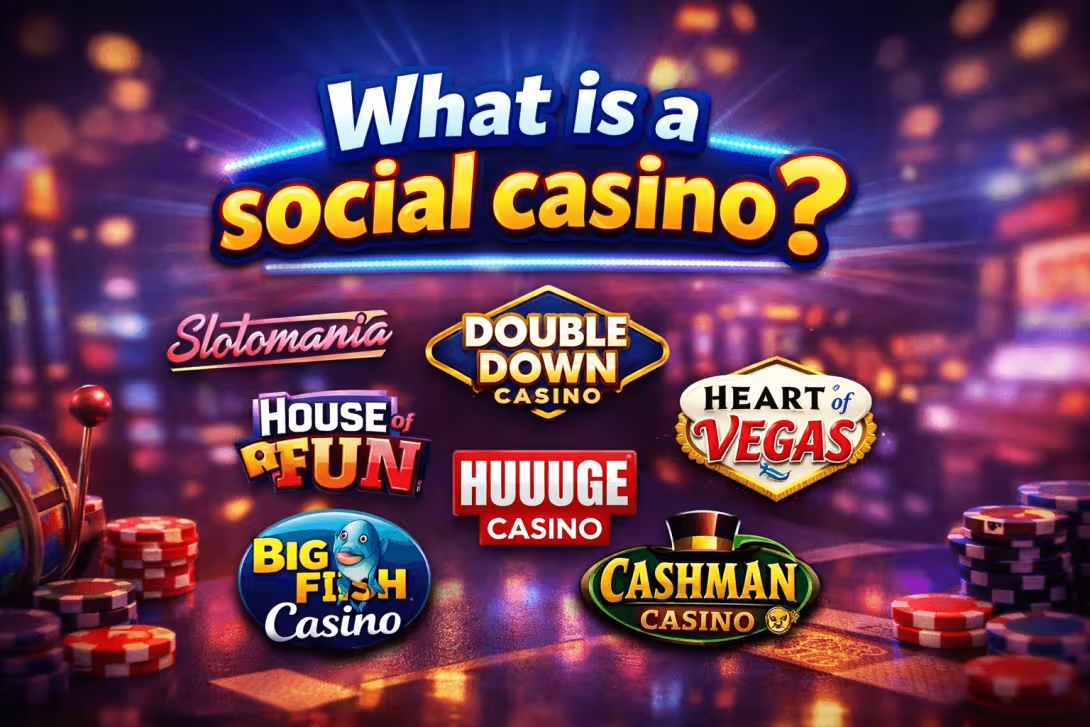
Social casinos are redefining digital gaming by combining entertainment, social interaction, and monetization without real-money payouts. Built on a freemium model, these platforms attract users with free virtual currency while generating revenue through optional in-app purchases. Players engage with casino-style games enhanced by levels, achievements, and competitive features, creating an experience closer to mobile gaming than traditional gambling. The absence of cash withdrawals reduces financial risk for operators while increasing scalability. As engagement-driven ecosystems, social casinos demonstrate how behavioral design and community features can transform user activity into a sustainable and highly profitable business model.
The Freemium Model at the Core
Social casinos operate on a freemium framework that mirrors the mechanics of successful mobile gaming platforms. Entry barriers are deliberately low, allowing users to begin playing without any upfront financial commitment.
Players are typically provided with a daily allocation of free virtual coins, enabling continuous engagement without mandatory spending. However, as gameplay progresses and in-game resources diminish, users are presented with the option to purchase additional currency using real money.
This dual structure—free access combined with optional spending—creates a scalable revenue model. It encourages mass participation while monetizing a smaller segment of highly engaged users, often referred to as “premium players.”
Monetization Through Virtual Economies
At the heart of social casinos lies a carefully designed virtual economy. While users cannot withdraw winnings, the perceived value of virtual currency is reinforced through gameplay progression and rewards.
Purchases are often positioned as enhancements rather than necessities, allowing players to extend sessions, unlock features, or accelerate advancement. This approach reduces resistance to spending and aligns with consumer behavior observed in mobile gaming ecosystems.
From a financial perspective, the absence of real-money payouts eliminates volatility, enabling operators to maintain predictable revenue streams and higher operating margins.
Gamification Drives Continuous Engagement
Unlike traditional online casinos, social casinos emphasize gamification as a central pillar of user retention. Features such as levels, achievements, and time-bound events introduce a sense of progression that keeps players invested over longer periods.
These mechanics transform gameplay into an ongoing journey rather than a series of isolated bets. Users are incentivized to return regularly to complete challenges, unlock rewards, and maintain their status within the platform.
This continuous engagement model increases lifetime value per user, a key performance indicator in digital gaming businesses.
The Role of Social Interaction
A defining characteristic of social casinos is their integration of community-driven features. Chat functions, multiplayer interactions, and shared experiences create a sense of belonging among users.
Leaderboards and competitive events further amplify engagement by introducing elements of rivalry and recognition. Players are not only motivated by in-game rewards but also by their standing within the community.
This social layer differentiates these platforms from conventional casino environments, positioning them closer to social media applications in terms of user behavior and interaction patterns.
Blurring the Line Between Gaming and Social Platforms
The convergence of gaming and social networking is a key factor behind the success of social casinos. By combining entertainment with interaction, these platforms create immersive ecosystems that extend beyond traditional gameplay.
Users often perceive the experience as a form of casual entertainment rather than gambling, which broadens the appeal to a more diverse audience. This positioning also allows operators to navigate regulatory landscapes more easily, as the absence of real-money winnings distinguishes them from conventional betting platforms.
Strategic Implications for the Industry
The operational model of social casinos offers valuable insights for the broader iGaming sector. By prioritizing engagement, retention, and community, operators can build sustainable revenue streams without relying on high-risk financial mechanics.
As competition intensifies, the ability to design compelling user experiences will become increasingly critical. Social casinos illustrate that long-term profitability in digital gaming is not solely dependent on wagering activity, but on the creation of ecosystems that users are willing to invest time—and money—in.
Conclusion
Social casinos represent a fundamental shift in how gaming platforms generate revenue and retain users. Through a combination of freemium access, gamification, and social interaction, they have created a model that is both scalable and resilient.
In an industry often defined by risk and regulation, these platforms offer an alternative path—one where engagement, rather than gambling, drives financial success.
Comments