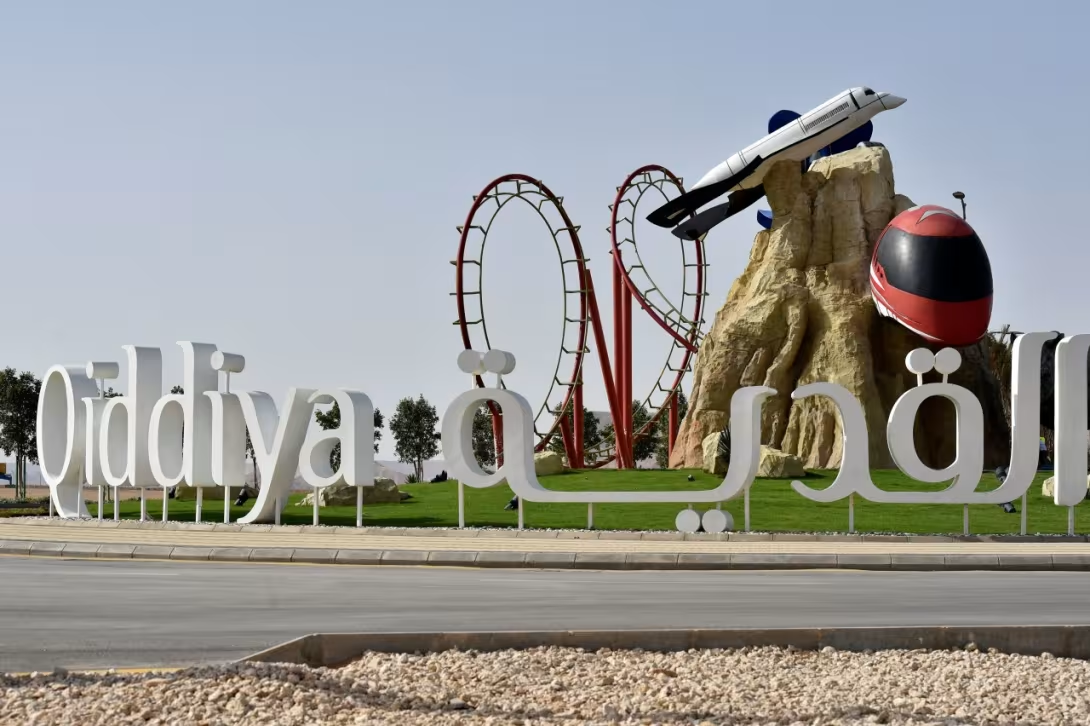
Saudi Arabia has taken a bold step in redefining global entertainment tourism with the launch of record-breaking attractions at its Qiddiya City development. Headlined by the Falcons Flight roller coaster—now the world’s fastest, tallest, and longest—the project reflects the Kingdom’s strategic push to diversify its economy beyond oil. Complemented by the towering Sirocco drop ride, the destination aims to attract international visitors and position itself as a premier leisure hub. The initiative underscores Saudi Arabia’s long-term investment in tourism infrastructure, signaling strong intent to compete globally in the high-value entertainment and hospitality sector.
A Landmark Moment in Global Entertainment Infrastructure
Saudi Arabia has officially entered the upper echelon of global leisure destinations with the unveiling of groundbreaking attractions at its Qiddiya City development. Located near the dramatic Tuwaiq Mountains, the project represents a cornerstone of the Kingdom’s broader economic transformation strategy.
At the heart of the launch is Falcons Flight, a roller coaster that has redefined engineering limits. Designed to deliver unprecedented speed and scale, the ride accelerates to an extraordinary 155 miles per hour, making it the fastest roller coaster ever constructed. Its towering height and extended track length further cement its position as a global record-holder.
This milestone signals Saudi Arabia’s intent to establish itself as a serious contender in the international tourism and entertainment market.
Engineering Excellence Meets Experiential Design
Falcons Flight is not merely a thrill ride; it is a statement of technological ambition and experiential innovation. The coaster propels riders up a red-rock cliff, offering panoramic views of the surrounding desert landscape before plunging through a tunnel and surging over its signature camelback hill.
The integration of natural topography with advanced engineering creates a uniquely immersive experience, blending adrenaline with scenic spectacle. Such design elements reflect a broader trend in the global theme park industry, where storytelling and environment are increasingly intertwined with ride mechanics.
Adjacent to the coaster stands the Sirocco Tower, now recognized as the tallest drop-tower ride in the world. Together, these attractions form a compelling anchor for the Six Flags Qiddiya City theme park, enhancing its global appeal.
Strategic Vision: Tourism as an Economic Engine
The launch of these attractions is deeply aligned with Saudi Arabia’s long-term economic diversification goals. As part of its Vision 2030 agenda, the Kingdom has prioritized tourism, entertainment, and hospitality as key drivers of non-oil revenue.
Qiddiya City is envisioned as a multi-faceted destination, combining theme parks, sports venues, cultural experiences, and residential developments. By investing in world-class infrastructure, Saudi Arabia aims to capture a larger share of the global tourism market, which continues to recover and expand post-pandemic.
High-impact attractions like Falcons Flight serve as powerful demand generators, drawing both domestic and international visitors while stimulating ancillary sectors such as hospitality, retail, and transportation.
Competitive Positioning in the Global Market
The global theme park industry is highly competitive, with established players in North America, Europe, and Asia commanding significant market share. Saudi Arabia’s strategy appears to focus on differentiation through scale, innovation, and integrated destination development.
By setting multiple world records, Qiddiya City immediately captures global attention, positioning itself as a must-visit destination for thrill-seekers and leisure travelers alike. This approach not only enhances brand visibility but also accelerates market entry in a crowded industry.
Moreover, the involvement of internationally recognized operators such as Six Flags adds credibility and operational expertise, further strengthening the project’s competitive positioning.
Economic Implications and Investment Outlook
From a financial perspective, large-scale entertainment projects like Qiddiya City require substantial capital investment but offer significant long-term returns. Revenue streams are expected to include ticket sales, hospitality services, merchandising, and real estate development.
The multiplier effect of such investments can be considerable, generating employment, boosting local economies, and attracting foreign direct investment. Analysts view the project as a high-risk, high-reward endeavor, with success contingent on sustained visitor inflows and effective operational management.
However, early indicators suggest strong potential, particularly given the growing global appetite for experiential travel and premium entertainment offerings.
Challenges and Considerations
While the project’s ambitions are undeniable, it also faces challenges typical of large-scale developments. These include maintaining consistent visitor demand, managing operational costs, and navigating geopolitical perceptions that may influence international tourism flows.
Additionally, environmental sustainability and resource management will be critical factors, especially given the scale of infrastructure involved.
Addressing these challenges effectively will be essential to ensuring the long-term viability and profitability of the development.
Conclusion
The debut of record-breaking attractions at Qiddiya City marks a pivotal moment in Saudi Arabia’s economic transformation journey. By combining engineering innovation with strategic vision, the Kingdom is positioning itself as a global leader in entertainment tourism.
Falcons Flight and the Sirocco Tower are more than just rides—they are symbols of ambition, signaling a shift toward a diversified, experience-driven economy. As the project continues to evolve, its success will be closely watched as a benchmark for large-scale tourism investments worldwide.
Comments