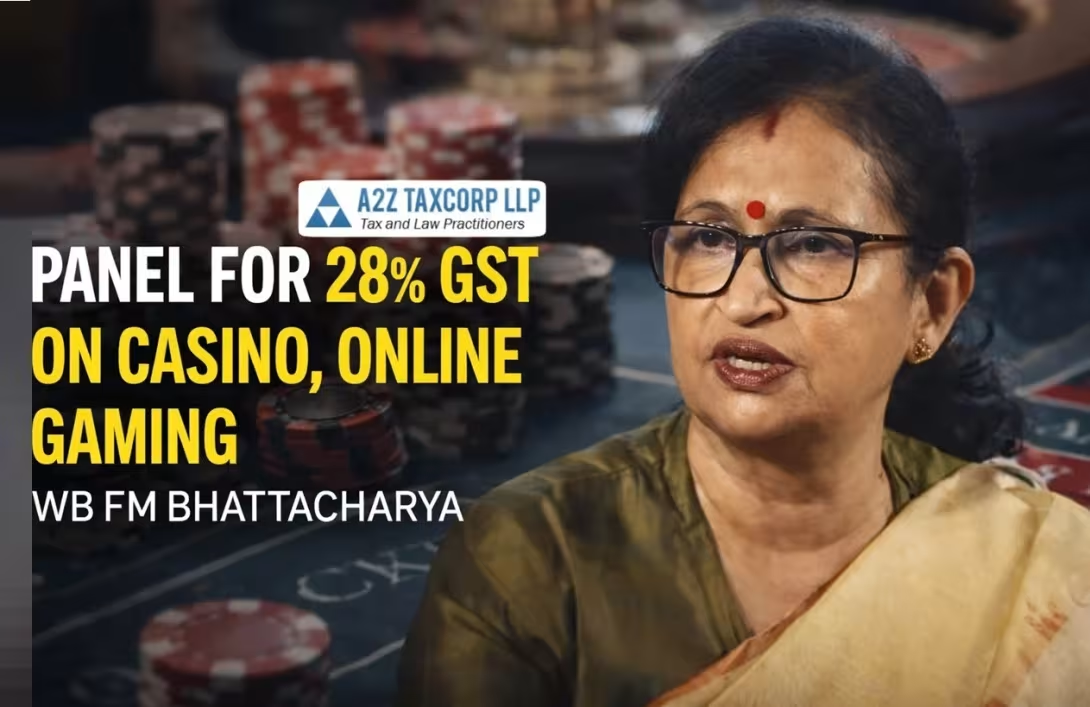
India is moving closer to a significant fiscal shift in its gaming and betting ecosystem, as a panel of state finance ministers has reached consensus on increasing the Goods and Services Tax (GST) on casinos, horse racing, and online gaming services to 28 percent. The proposal reflects growing concerns over revenue optimization and regulatory clarity in a rapidly expanding digital entertainment market. While the rate hike appears settled, ambiguity remains around the valuation methodology—whether taxation will apply to gross or net revenues. The final framework, pending further deliberation, is expected to reshape industry economics and influence investor sentiment across the gaming sector.
Policy Consensus on GST Rate Hike
A key panel of state finance ministers has unanimously supported raising the GST rate on casinos, racecourses, and online gaming platforms to 28 percent, signaling a decisive policy direction. The recommendation represents a sharp increase from the current 18 percent tax rate, reflecting the government’s intent to align these services with the highest tax bracket.
The decision emerged after extensive deliberations within the Group of Ministers (GoM), which was constituted to streamline taxation in sectors that have historically operated within regulatory gray areas. The proposed increase underscores a broader fiscal strategy aimed at enhancing tax compliance while capturing a larger share of revenues from high-growth digital and entertainment industries.
Unresolved Debate on Valuation Methodology
Despite agreement on the tax rate, policymakers remain divided on a critical technical aspect: the valuation base. The central question is whether GST should be levied on gross value—total transaction amounts—or net value, which reflects platform commissions or margins.
This distinction carries significant financial implications. A gross-based taxation model could substantially increase the effective tax burden on operators, potentially altering pricing structures and user engagement. Conversely, a net-based approach may offer relief to businesses but could limit the government’s revenue potential.
The matter has been referred to senior officials for further examination, with a final recommendation expected before implementation.
Industry Implications and Market Response
The proposed tax hike is likely to have wide-ranging consequences for stakeholders. Online gaming companies, already operating in a competitive environment, may face margin pressures, prompting potential consolidation or strategic restructuring. Casino and racecourse operators could also see reduced footfall if higher taxes translate into increased costs for consumers.
From an investment perspective, the move introduces short-term uncertainty. However, analysts suggest that regulatory clarity—even at a higher tax rate—could improve long-term stability, making the sector more attractive to institutional investors.
Government’s Revenue and Regulatory Strategy
The initiative aligns with the government’s broader objective of formalizing and regulating emerging digital sectors. By placing gaming services in the highest GST slab, authorities aim to both discourage speculative activity and ensure equitable taxation across industries.
The GoM, chaired by Meghalaya Chief Minister Conrad Sangma, has played a pivotal role in shaping this policy direction. Its recommendations are expected to form the basis for final approval at the GST Council level.
Outlook: Balancing Growth and Regulation
As India’s gaming industry continues to expand, policymakers face the challenge of balancing revenue generation with sustainable growth. The final decision on valuation methodology will be crucial in determining the sector’s trajectory.
While the proposed 28 percent GST rate marks a turning point, its ultimate impact will depend on execution. For businesses and investors alike, the coming months will be critical in assessing how regulatory clarity translates into economic reality.
Comments