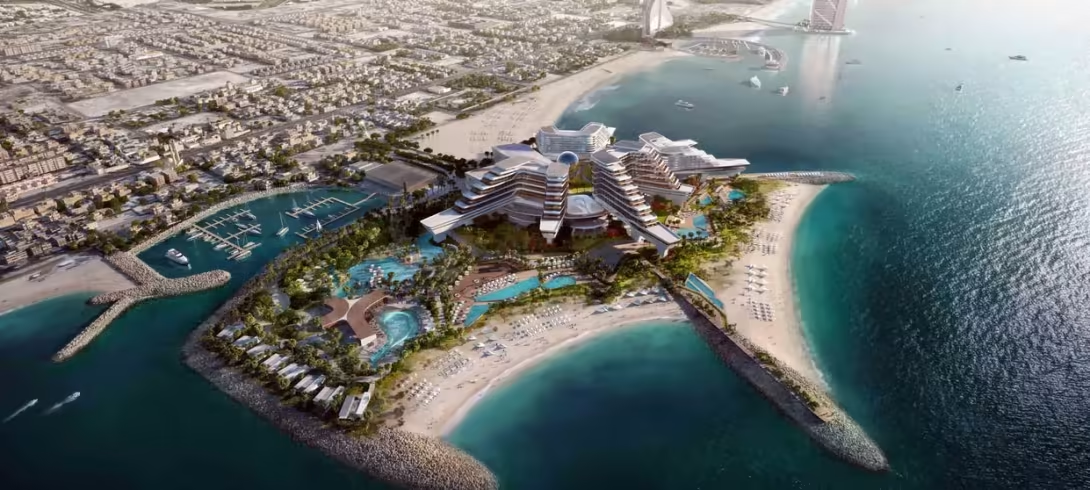
MGM Resorts International, one of the world’s largest gaming and hospitality groups, is still awaiting regulatory approval for a casino license in the United Arab Emirates (UAE), a market widely viewed as the next frontier for global gaming. The Gulf nation has recently taken steps toward legalizing certain forms of gambling, spurring international operators to position themselves for early entry. For MGM, the approval process is pivotal, as it could provide access to a lucrative market with a rapidly expanding tourism economy. However, the delay reflects the UAE’s cautious approach to balancing economic diversification with cultural sensitivities.
---
The Strategic Significance of the UAE
The UAE has long been synonymous with luxury, tourism, and large-scale infrastructure investments. With a focus on diversifying beyond oil revenues, the country has invested heavily in aviation, real estate, and entertainment. Legalizing casinos is seen as part of this broader strategy to elevate its global tourism profile. Industry analysts estimate that a UAE casino market could generate annual revenues exceeding Rs. 1.6 lakh crore, making it one of the most attractive prospects outside Asia’s established hubs of Macau and Singapore. For MGM Resorts, a license here would represent both a financial opportunity and a symbolic foothold in the Middle East.
---
MGM’s Positioning and Investments
MGM has already made significant commitments in the region, including partnerships in hospitality and entertainment projects. The company envisions integrating gaming facilities into luxury resorts, aligning with the UAE’s brand as a destination for high-net-worth visitors. The model emphasizes not only gaming but also fine dining, live performances, and family-oriented leisure activities. Such an integrated approach would differentiate MGM’s offering from traditional casino-centric properties, making it more acceptable within the UAE’s regulatory and cultural framework.
---
Regulatory and Cultural Hurdles
The central challenge remains the UAE’s cautious approach to licensing. Gambling has historically been restricted across much of the Gulf due to cultural and religious considerations. Although the government has signaled openness to tightly controlled casino operations, the approval process is deliberately gradual. Regulators are expected to impose strict compliance measures covering responsible gaming, financial transparency, and anti-money laundering protocols. This measured pace reflects the authorities’ desire to ensure casinos complement—rather than conflict with—the country’s social and cultural values.
---
Global Competition for Market Entry
MGM is not the only international player vying for entry into the UAE. Several global operators with track records in Asia and North America are actively seeking partnerships with local developers. The competition is intense, with companies highlighting their ability to deliver world-class resorts that integrate seamlessly into the UAE’s tourism strategy. Analysts believe that only a limited number of licenses will be issued, raising the stakes for MGM and its rivals. Securing approval would position the winning operators to capitalize on a market with both global appeal and high spending potential.
---
Economic Implications
A casino industry in the UAE could significantly boost non-oil GDP by generating tax revenue, stimulating foreign investment, and creating thousands of jobs. For local economies, the spillover benefits include growth in hospitality, retail, and infrastructure. However, concerns remain regarding problem gambling and the social impact of gaming. Addressing these risks through strong regulation and transparent operations will be essential for long-term success.
---
Conclusion
MGM Resorts’ wait for a UAE casino license underscores the delicate balance between economic opportunity and cultural sensitivity. While the financial incentives are undeniable, the UAE’s deliberate regulatory process highlights its intent to craft a casino industry aligned with its values and long-term vision. For MGM, the license would mark a milestone in its global expansion strategy and could redefine the geography of international gaming. Until then, the company—and the broader industry—remains in suspense, watching closely as the UAE decides how to shape its entry into the world of regulated gaming.
Comments