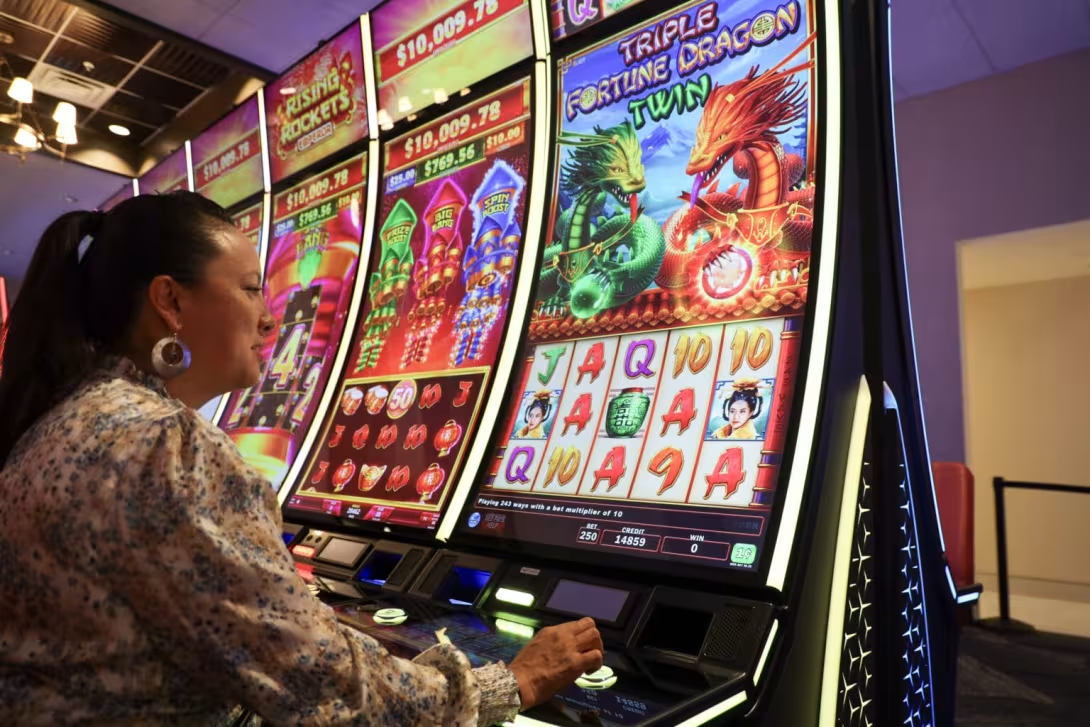
New York is entering a pivotal phase in the evolution of its gaming industry as competition for full-scale casino licenses accelerates across the state. Major developers, investors and hospitality groups are proposing multibillion-dollar integrated resort projects that promise to generate jobs, tourism revenue and tax collections. Supporters argue that new casinos could transform entertainment districts, attract international visitors and stimulate local economies. Critics, however, raise concerns about community impact, traffic congestion and responsible gambling. As regulators evaluate competing bids, the outcome is expected to reshape New York’s tourism, real estate and gaming sectors for decades to come.
New York’s High-Stakes Casino Race Draws Billions in Investment Proposals
New York is witnessing one of the most significant developments in its gaming and hospitality industry as leading investors and entertainment companies compete for opportunities in a rapidly expanding casino market.
The state has emerged as a focal point for gaming investment, with developers proposing large-scale integrated resorts that combine casinos with hotels, restaurants, retail centers, entertainment venues and convention facilities. The projects collectively represent billions of dollars in potential investment and could redefine the economic landscape of several communities.
Industry analysts view the expansion as part of a broader trend in which casinos are evolving beyond gaming floors to become comprehensive entertainment destinations.
Economic Potential Drives Investor Interest
The prospect of obtaining a casino license in one of the world's most influential consumer markets has attracted significant interest from domestic and international investors.
Developers argue that integrated casino resorts can generate substantial economic activity through tourism spending, employment creation and infrastructure development. Construction projects alone are expected to support thousands of jobs, while long-term operations could provide sustained employment opportunities across hospitality, security, retail and management functions.
Beyond direct employment, casino resorts often stimulate demand for surrounding businesses, including restaurants, transportation providers and local service companies.
For state and municipal governments, gaming taxes represent an additional source of public revenue that can be allocated toward education, infrastructure and community programs.
Competition Extends Beyond Gaming
The race for casino licenses is not solely about gambling revenue. Developers increasingly position their projects as mixed-use destinations designed to enhance tourism and urban development.
Many proposals include luxury hotels, entertainment arenas, conference centers and public spaces aimed at attracting visitors beyond traditional casino patrons. Industry experts note that modern gaming operators generate a significant portion of revenue from non-gaming activities, reflecting changing consumer preferences.
As a result, success in the licensing process often depends as much on broader economic benefits as on gaming operations themselves.
Community Concerns Remain a Key Factor
Despite the projected economic gains, casino expansion continues to generate debate among local stakeholders.
Community groups have raised concerns about traffic congestion, housing pressures and the social consequences associated with expanded gambling access. Critics argue that policymakers must carefully balance economic development objectives with safeguards designed to protect residents and vulnerable populations.
Responsible gaming measures, community investment commitments and transportation planning have therefore become central elements of many development proposals.
The ability of developers to address these concerns may play a significant role in determining which projects ultimately receive approval.
Real Estate Sector Sees New Opportunities
The casino expansion race is also influencing New York's commercial real estate market. Proposed developments are expected to increase property values in surrounding areas while attracting complementary investments in hospitality, retail and residential projects.
Real estate analysts suggest that integrated resorts could become catalysts for broader urban revitalization efforts, particularly in districts seeking new sources of economic growth.
However, market observers caution that long-term success will depend on maintaining strong visitor demand and ensuring that new developments complement existing attractions rather than merely redistributing consumer spending.
A Defining Moment for New York’s Gaming Industry
The decisions made by regulators in the coming months could have lasting implications for New York's economic future. Successful projects may generate billions of dollars in investment and strengthen the state's position as a global entertainment destination.
At the same time, policymakers face the challenge of ensuring that growth is sustainable, socially responsible and beneficial to local communities.
As developers continue refining their proposals and regulators assess competing applications, New York's casino expansion effort stands as one of the most closely watched investment stories in the gaming industry. The outcome will help determine not only the future of casino gaming in the state but also the direction of broader tourism and economic development strategies for years to come.
Comments