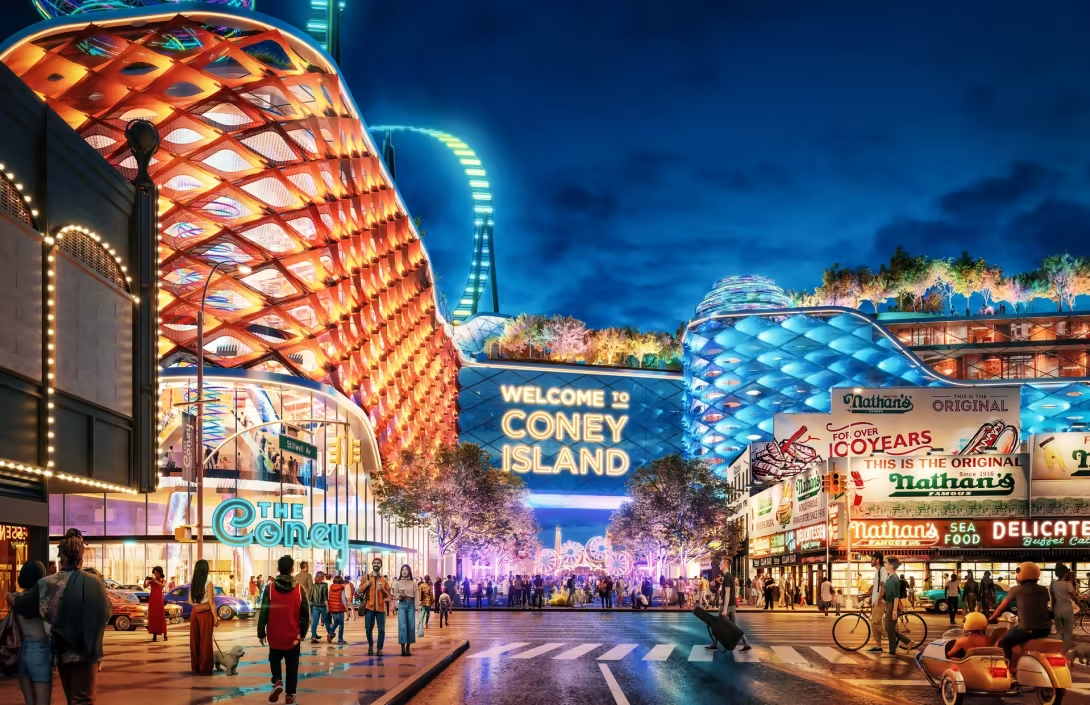
The High-Stakes Casino Race in New York
New York City has become the epicenter of a heated competition among global gaming giants, with billions of dollars in investment promises driving the race for coveted casino licenses. As state regulators weigh proposals, developers are unveiling ambitious blueprints that blend luxury resorts, entertainment venues, and community infrastructure projects. The stakes are immense: successful bidders stand to transform parts of the city into tourism and leisure hubs, while policymakers eye the economic benefits of job creation, tax revenues, and urban revitalization. The contest, however, is as much about politics and public opinion as it is about capital.
---
Billion-Dollar Investments on the Table
At the heart of the casino race are multi-billion-dollar commitments aimed at swaying regulators and winning public support. Proposals feature sprawling entertainment complexes with luxury hotels, theaters, high-end retail, and dining destinations—designed to appeal not only to tourists but also to local communities. Developers are emphasizing their ability to deliver sustained revenue streams for the state, with projected tax contributions running into the hundreds of millions annually. These promises are intended to position casinos as more than gambling venues: they are marketed as engines of economic renewal in a city still recovering from pandemic-era disruptions.
---
A Battle for Location and Community Support
One of the fiercest points of contention lies in location. Competing developers are pitching projects in diverse neighborhoods, from Manhattan’s bustling core to outer boroughs seeking revitalization. Each location carries unique advantages and challenges. While a central Manhattan project may maximize tourist traffic, community pushback over congestion and lifestyle disruption could complicate approval. Conversely, proposals for underdeveloped areas tout the benefits of job creation and infrastructure upgrades, though they face questions about long-term viability. Developers are increasingly highlighting community partnerships, pledging investments in housing, education, and public amenities to strengthen local buy-in.
---
The Political Dimension
The awarding of casino licenses in New York is not a purely commercial decision. Political maneuvering plays a crucial role, with local lawmakers, unions, and civic groups exerting influence over the process. Public hearings have become forums where both excitement and opposition are voiced, reflecting the polarized views surrounding gambling expansion. Some leaders view casinos as catalysts for economic growth and employment, while others fear social costs such as addiction and neighborhood disruption. Regulators are therefore balancing economic imperatives with public sentiment, a task made more complex by the scale of the financial promises on offer.
---
Economic Impact and Urban Transformation
If approved, the winning projects could fundamentally reshape New York City’s leisure and hospitality landscape. Industry analysts suggest that the new casinos could rival the scale of Las Vegas resorts, positioning New York as a global gaming destination. Beyond direct employment in construction and hospitality, ripple effects are expected across retail, transport, and real estate. For the city government, casinos promise an additional stream of tax revenues that could support public services. Yet, the success of these ventures will depend on the careful management of regulatory oversight and community engagement to ensure long-term sustainability.
---
Conclusion
The battle for casino licenses in New York City underscores the convergence of capital, politics, and urban development in one of the world’s most competitive markets. Billion-dollar pledges from developers highlight both the scale of opportunity and the intensity of competition. As regulators deliberate, the outcome will not only determine which companies gain a foothold in the nation’s largest metropolitan market but also how the city balances economic ambition with social responsibility. The final decision could set a precedent for how major U.S. cities navigate the promises and pitfalls of casino-driven development.
Comments