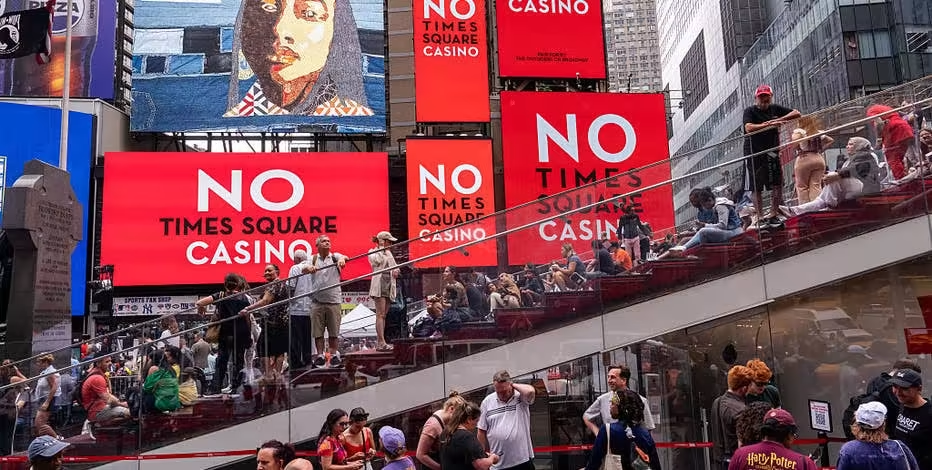
New York City’s casino licensing process has emerged as one of the most closely watched developments in the U.S. gaming industry, attracting interest from global operators, real estate giants, and financial backers. With three downstate licenses up for grabs, proposals from Manhattan to Queens and Brooklyn to the Bronx are competing not only on scale and luxury but also on promises of community impact, job creation, and tax revenue. Each bid reflects a different vision of what a casino could mean for the city—either as an entertainment hub, a tourism anchor, or a revitalization engine for underserved neighborhoods.
Manhattan: The Battle Over Prime Real Estate
Several high-profile proposals in Manhattan have drawn both attention and opposition. Developers have pitched luxury integrated resorts combining casinos, hotels, fine dining, and entertainment spaces in central locations such as Midtown and Times Square. While supporters argue that Manhattan’s global profile makes it ideal for an international gaming destination, critics have raised concerns about congestion, affordability, and the social costs of bringing large-scale gaming into the city’s cultural heart. Community resistance and zoning complexities continue to pose hurdles for any Manhattan bid.
Queens: Leveraging Existing Infrastructure
In Queens, Resorts World New York City, located at Aqueduct Racetrack, is considered a frontrunner. Already operational as a video lottery terminal facility, the property has an established customer base, strong community ties, and significant infrastructure. Converting it into a full-scale casino would require fewer regulatory obstacles compared with a new build. Proponents highlight its proven track record in generating state revenue and creating local jobs, positioning it as a pragmatic choice for regulators seeking minimal risk and maximum return.
Brooklyn: A Vision for Economic Revival
Brooklyn has emerged as another contender, with proposals emphasizing the borough’s cultural vibrancy and untapped tourism potential. Developers have argued that a casino in Brooklyn could serve as an anchor for waterfront redevelopment projects, drawing visitors beyond Manhattan and boosting local businesses. However, questions remain about infrastructure readiness, community acceptance, and whether the borough’s identity as a creative and residential hub aligns with large-scale gaming operations.
The Bronx and Staten Island: Long-Shot Bids
Both the Bronx and Staten Island have seen speculative proposals, though neither has yet advanced to the same level of visibility as Manhattan, Queens, or Brooklyn. Advocates argue that these boroughs could benefit from the jobs and economic stimulus that casino developments promise, particularly in areas underserved by traditional investment. Still, challenges include weaker tourism infrastructure and potential opposition from local residents concerned about crime, traffic, and social impacts.
Regulatory Framework and Timeline
The state’s Gaming Facility Location Board is tasked with evaluating proposals based on economic benefit, community impact, and compliance with regulatory requirements. The selection process involves not only financial commitments but also detailed community advisory reviews, ensuring local stakeholders have a voice. Industry analysts suggest that final decisions could be delayed as policymakers weigh competing priorities: maximizing state revenue, supporting community development, and safeguarding against the risks of over-saturation in the city’s already dense entertainment market.
Broader Economic and Social Implications
The casino race is unfolding against the backdrop of New York’s broader post-pandemic recovery strategy. Proponents argue that casinos could provide steady revenue streams and create thousands of jobs at a time when the city is striving to revive its tourism sector. Critics, however, warn of potential downsides such as gambling addiction, increased traffic, and rising living costs in already expensive neighborhoods.
Comments