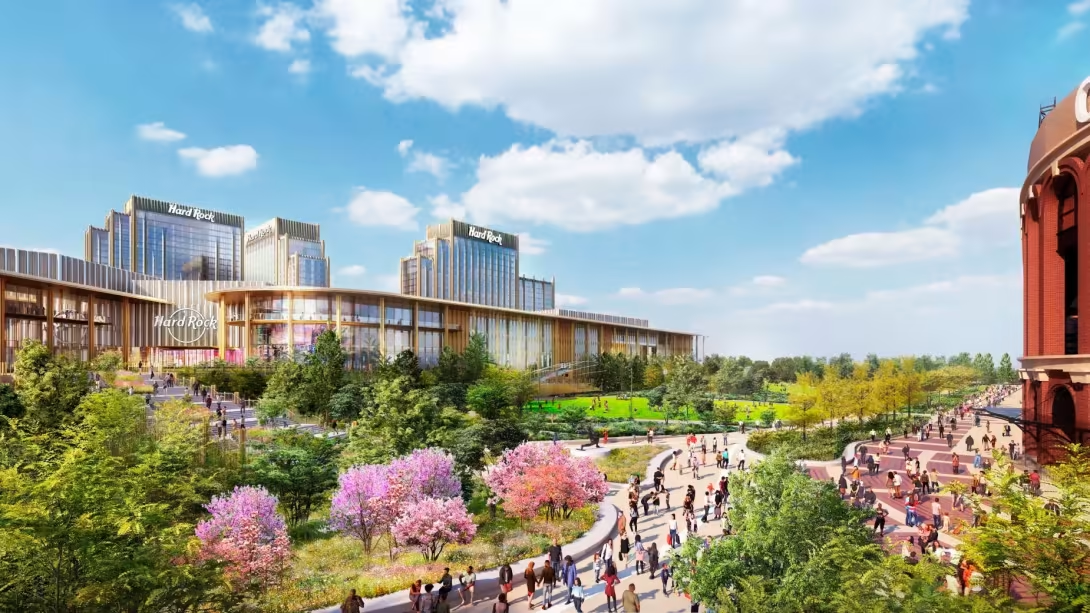
Hard Rock’s Metropolitan Park has advanced as the final frontrunner in New York’s competitive casino licensing race, signaling a potential milestone for the state’s gaming and hospitality sectors. The project, poised to generate significant economic activity, promises job creation, tourism influx, and substantial tax revenues. Positioned against other ambitious proposals, Metropolitan Park has distinguished itself through its strategic location, design, and financial viability. The development reflects broader trends in regulated gaming expansion across the U.S., underscoring the growing emphasis on integrated entertainment destinations. Stakeholders closely monitor the decision, which could reshape New York’s casino landscape.
---
Metropolitan Park: Project Overview
Hard Rock’s Metropolitan Park proposal represents a comprehensive casino and entertainment complex in a prime urban location. Key highlights include:
Integrated Entertainment: The project combines gaming facilities, luxury accommodations, dining, retail, and live performance venues.
Strategic Location: Situated in a high-traffic metropolitan corridor, the site leverages accessibility and existing infrastructure to attract local and tourist patronage.
Financial Viability: Projected investment runs into several hundred million Rs., with anticipated tax contributions strengthening state revenues.
Experts highlight that the proposal’s holistic approach aligns with global trends in integrated resort development, where gaming is complemented by lifestyle and entertainment amenities.
---
Economic Implications
The approval of Metropolitan Park would generate broad economic benefits:
Job Creation: Thousands of direct and indirect employment opportunities across construction, hospitality, and operations.
Tourism Boost: Potential to attract regional and international visitors, enhancing ancillary sectors such as retail, transportation, and leisure.
Tax Revenues: Significant contributions to state coffers through gaming, hospitality, and related business activities.
Analysts note that metropolitan casino projects often serve as catalysts for urban revitalization, fostering long-term economic growth beyond gaming revenues.
---
Competitive Landscape
The New York casino licensing process has been fiercely contested, with multiple developers presenting ambitious proposals. Metropolitan Park’s selection as the final contender indicates:
Strategic Edge: Superior site selection, financial robustness, and comprehensive development plans.
Regulatory Confidence: Compliance with state gaming regulations and demonstrated commitment to community engagement.
Market Positioning: Ability to compete with regional gaming hubs while enhancing New York’s entertainment portfolio.
Industry observers emphasize that licensing decisions consider economic impact, social responsibility, and alignment with state development objectives.
---
Social and Regulatory Considerations
Alongside economic prospects, Metropolitan Park must navigate social, legal, and regulatory scrutiny:
Responsible Gaming Measures: Plans include robust mechanisms to mitigate problem gambling and ensure safe operations.
Community Engagement: Hard Rock emphasizes partnerships with local stakeholders to maximize social benefits and address concerns.
Sustainability Focus: Development incorporates eco-conscious design, energy-efficient systems, and urban integration strategies.
Such considerations are increasingly central to modern casino approvals, reflecting the balance between economic development and societal responsibility.
---
Conclusion
Hard Rock’s Metropolitan Park stands at the forefront of New York’s casino race, representing a convergence of investment potential, entertainment innovation, and urban economic impact. The project underscores the evolving landscape of regulated gaming in the U.S., highlighting opportunities for state revenue, employment, and tourism growth. As licensing authorities finalize their decision, Metropolitan Park’s progress signals a transformative moment for New York’s hospitality and entertainment sectors, offering a model for integrated urban casino development.
Comments