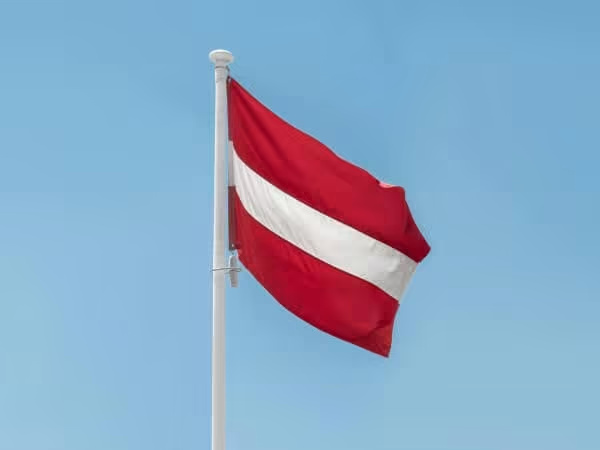
Austria is set to end its decades-long state monopoly on online casinos by 2025, marking a transformative shift in the country’s gaming and digital entertainment landscape. The move aims to introduce a more competitive and transparent market structure, encourage innovation, and align national regulations with European Union standards on fair competition. Industry experts anticipate that this policy change could attract significant foreign investment, boost tax revenues, and reshape how digital gambling platforms operate across Central Europe.
---
The End of a Monopoly Era
For years, Austria’s online gambling scene has been dominated by a single state-backed operator, which held exclusive rights over casino-style gaming. This monopoly faced increasing criticism from European regulators and private operators, who argued that it violated EU principles of market equality and consumer choice.
By opening the sector to multiple licensed companies, Austria aims to dismantle a system long accused of limiting competition and innovation. The reform is expected to level the playing field for both domestic and international players while ensuring stronger consumer protections and responsible gaming standards.
---
A Strategic Move Toward Regulation and Transparency
The Austrian government’s decision comes amid broader efforts across Europe to modernize gambling regulations. Countries such as Germany, the Netherlands, and Sweden have already transitioned from monopolistic systems to multi-license frameworks that balance market freedom with social responsibility.
Under the new Austrian model, regulatory oversight will be strengthened through a dedicated supervisory body. This authority will monitor license holders, enforce compliance with anti-money-laundering protocols, and implement data-driven safeguards to prevent problem gambling. Additionally, transparent tax structures will ensure that the government continues to benefit from the sector’s growth while curbing illegal and unregulated platforms.
---
Economic Implications and Industry Response
Market analysts predict that the liberalization could generate substantial economic activity, with new entrants investing in digital infrastructure, customer support, and technology innovation. The competitive environment may also lead to better gaming experiences, enhanced security measures, and more attractive bonuses for players.
However, some concerns persist regarding potential over-saturation and the social impact of expanded gambling access. Industry stakeholders have urged regulators to balance economic opportunity with responsible gaming initiatives, ensuring that consumer welfare remains at the forefront of the reform.
---
A Turning Point for Europe’s Gambling Landscape
Austria’s decision reflects a broader continental shift toward modernization and market openness in the gambling sector. As the nation prepares for a 2025 rollout, it is positioning itself as a potential model for regulatory evolution within the European Union.
By embracing competition, Austria not only aims to attract international investment but also to foster a safer, more accountable, and technologically advanced gambling ecosystem. The end of the monopoly marks not just a legal or economic reform — it signals the beginning of a new era for Europe’s gaming future.
Comments