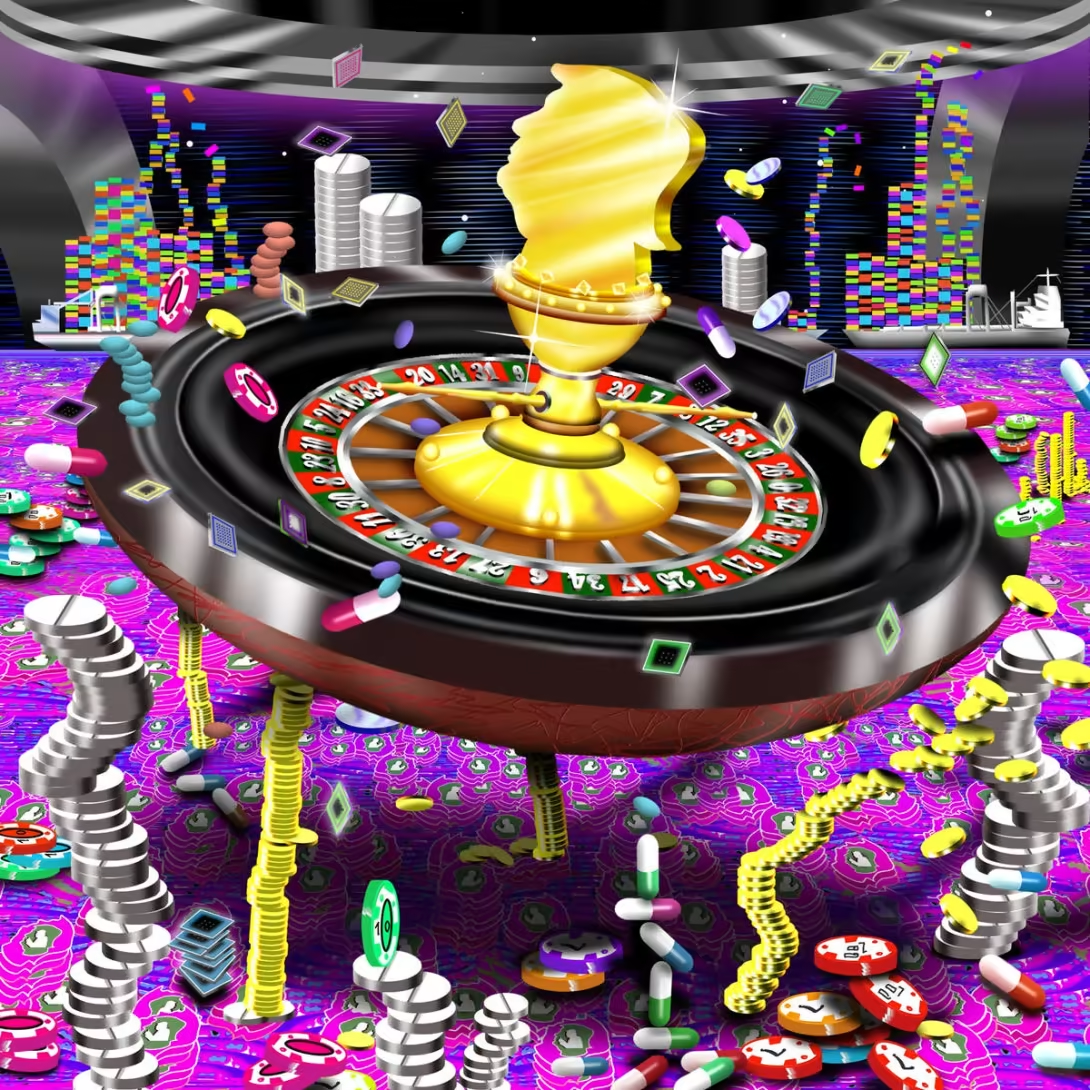
The American economy under Donald Trump’s renewed influence has begun to resemble a casino—where luck, speculation, and risk-taking define success more than fundamentals. Fueled by soaring asset prices, political populism, and speculative enthusiasm, the market’s current structure rewards short-term gains while ignoring systemic imbalances. From inflated valuations to widening wealth gaps, this casino-style capitalism thrives on perception over productivity. Beneath the flashing lights of record highs and bold rhetoric, many Americans find themselves wagering in a game they cannot win—a market driven not by value creation, but by volatility, debt, and illusionary prosperity.
---
The Casino Economy: A System Built on Risk, Not Reform
The post-Trump economic narrative is one of excess optimism and speculative fervor. Equity markets hover near historic peaks, buoyed by political bravado, tax incentives, and a culture of relentless risk-taking. In this environment, traditional investment principles—steady growth, innovation, and long-term value—are overshadowed by the thrill of rapid returns.
Much like a casino floor, the economy thrives on momentum. Retail investors chase quick profits, corporations inflate valuations through buybacks, and political figures celebrate every uptick as proof of success. Yet beneath the glamour lies fragility. Rising household debt, an overstretched credit market, and a dependency on asset inflation expose the system’s underlying instability.
Trump’s political brand has redefined capitalism into a spectacle—a blend of entertainment, nationalism, and financial gambling—where perception dictates reality and markets operate as performance art.
---
Speculation Over Substance: The New Economic Game
The Trump-era financial landscape rewards speculation more than substance. Markets have become hypersensitive to sentiment, with social media chatter and political headlines influencing price action more than earnings reports or economic data.
Investors—both institutional and retail—are drawn into cycles of euphoria and panic, much like gamblers chasing streaks at a blackjack table. Cryptocurrencies, meme stocks, and leveraged trades dominate portfolios once governed by diversification and risk management.
The allure of instant wealth, amplified by populist narratives of empowerment, fuels a dangerous cycle. For every winner who strikes it rich on timing, countless others are left holding losses when sentiment shifts. This casino economy thrives on churn—new players entering the table, convinced they’ll beat the odds, only to find the house, as always, wins.
---
Debt, Inflation, and the Illusion of Growth
At the heart of this speculative boom lies a deeper problem: artificial prosperity sustained by credit expansion and asset inflation. Low interest rates, government stimulus, and deregulation have created an environment where financial engineering substitutes for genuine economic productivity.
Household savings rates are declining while consumer debt reaches unprecedented levels. Corporate leverage continues to expand, driven by the pursuit of shareholder returns rather than reinvestment in innovation or labor. Inflationary pressures, once considered transitory, now erode real purchasing power, disproportionately affecting the middle and lower-income classes.
In essence, the American dream has become collateral for a debt-fueled fantasy—a system where short-term liquidity trumps long-term stability.
---
The Politics of Profit: Populism Meets Financialization
Trump’s economic vision thrives on the theatrics of prosperity. Political rallies tout stock market highs as proof of leadership, conflating market performance with national well-being. This narrative resonates deeply with a population disillusioned by stagnant wages and widening inequality.
The result is a political-financial feedback loop. Populism fuels speculative optimism, which drives asset prices higher, which in turn reinforces the illusion of success. Meanwhile, structural issues—education, infrastructure, healthcare, and productivity—remain neglected.
The casino economy is not simply financial; it’s cultural. It reflects a society increasingly addicted to spectacle, immediacy, and risk—an economy of constant excitement but diminishing resilience.
---
Winners, Losers, and the Rigged Game
In any casino, few win consistently—and the same holds true in Trump’s economic model. The affluent, armed with access to leverage, information, and influence, play by a different set of rules. Institutional investors hedge their risks, while retail traders bear the brunt of market corrections.
The wealth gap widens, and economic mobility stagnates. The very system that promises opportunity instead concentrates advantage. Capitalism, once rooted in entrepreneurship and innovation, morphs into a game of speculation and extraction—where wealth creation increasingly comes from manipulating financial assets rather than producing real goods or services.
This is the paradox of the casino economy: it democratizes participation but not outcomes. Everyone is invited to play, but only a few ever cash out big.
---
The Road Ahead: When the House Lights Go Down
As the spectacle continues, the question remains—how long can this illusion sustain itself? Economic cycles inevitably revert, and when the tide turns, the vulnerabilities of this system will surface with force. Rising interest rates, policy uncertainty, and global market corrections could expose the fragility hidden beneath the surface of exuberance.
Reforming this model requires more than fiscal tightening or regulatory oversight. It demands a cultural shift—from speculation to sustainability, from performance to productivity. Until that happens, the U.S. economy will continue to operate as a high-stakes casino, spinning on confidence, credit, and charisma.
And as history often reminds us, when the lights dim and the tables clear, it’s rarely the players who walk away winners—it’s the house.
---
Conclusion: A Nation Betting on Itself
The Trump-era economy encapsulates both the brilliance and danger of American capitalism—a system capable of dazzling innovation yet prone to destructive excess. Its casino-like structure promises opportunity but conceals risk, inviting millions to play a game few truly understand.
As speculative fever replaces strategic foresight, the nation finds itself caught between ambition and illusion. The coming years will determine whether this grand economic gamble leads to renewed prosperity—or whether the house of cards collapses under the weight of its own overconfidence.
Comments