Century Casinos, Inc. (NASDAQ: CNTY) has seen its share price tumble by nearly 27%, unsettling investors and signaling broader unease within the gaming industry. The steep fall follows lackluster earnings forecasts, sluggish revenue trends, and broader concerns over weakening consumer demand. Despite owning multiple casino properties across the U.S. and Europe, the company’s growth trajectory has softened, prompting market participants to reassess its long-term profitability. Analysts warn that without operational restructuring or stronger financial performance, Century Casinos may struggle to regain investor confidence amid an increasingly competitive and cost-sensitive entertainment landscape.
Declining Investor Confidence
The sharp downturn in Century Casinos’ stock underscores mounting investor skepticism about its financial resilience. The company’s recent reports show stagnant growth and persistent margin pressure, suggesting that revenue momentum has slowed significantly. Over the past year, the firm’s total revenue dropped by around 2.2%, while projections for next year estimate modest growth of just 5.2%—far below the industry’s 28% average. This sluggish outlook has triggered concerns about the sustainability of its current operating model and its ability to compete with larger, more diversified gaming operators.
The decline also highlights a broader sentiment shift among investors who are gravitating away from discretionary entertainment stocks as macroeconomic headwinds—such as inflation and tightening consumer budgets—continue to weigh on the sector.
Financial Performance Under Pressure
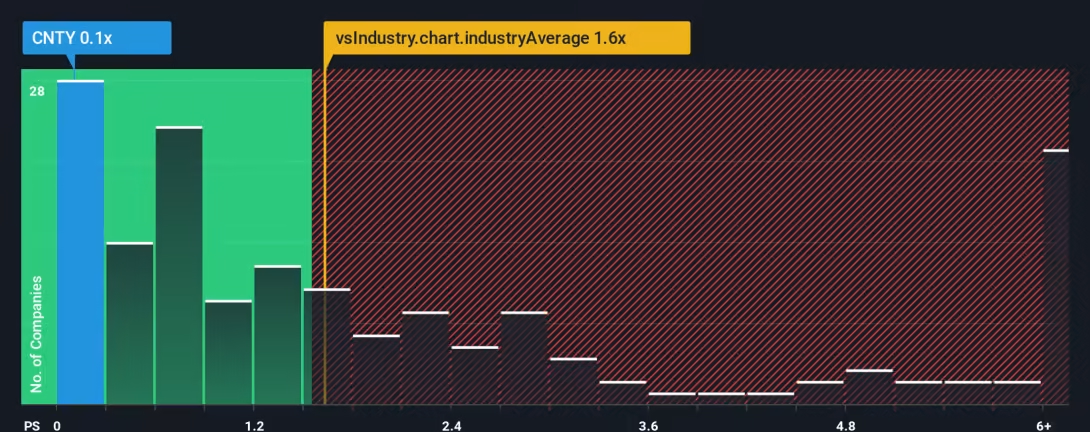
Century Casinos’ financial indicators reveal an underlying strain. Analysts expect the company to post a loss of approximately $0.28 per share in its upcoming quarterly results, with revenues projected at roughly $157 million. Such figures point to reduced consumer spending and softer footfall across its casino network. The company’s price-to-sales ratio, hovering around 0.1x, indicates market skepticism about its near-term growth potential, especially when compared with industry peers trading at substantially higher multiples.
In addition, Century Casinos is contending with rising operational costs and debt-related pressures. The company’s debt-to-equity levels remain elevated, and management’s cautious approach to capital allocation suggests a conservative financial stance rather than an aggressive growth strategy.
Macroeconomic and Market Challenges
The decline in Century Casinos’ performance aligns with broader industry trends. As inflation erodes disposable income, lower-tier and non-carded customers—who form a significant part of the company’s clientele—are cutting back on discretionary spending. This has impacted weekday operations and overall gaming volume, particularly in regional markets where competition has intensified.
Furthermore, the casino sector faces shifting consumer dynamics, with younger demographics gravitating towards online gaming and sports betting platforms rather than traditional casino venues. This digital transition poses a structural challenge for mid-sized operators like Century Casinos that have limited exposure to online platforms.
Strategic Uncertainty and the Road Ahead
Investors are also closely watching how Century Casinos addresses its strategic direction. The company has hinted at possible asset divestitures, particularly in underperforming regions, to streamline operations and strengthen its balance sheet. However, without a clear long-term growth narrative—such as entry into digital gaming or strategic partnerships—analysts fear that the company could remain trapped in a low-growth cycle.
A key turning point will be its next earnings release, scheduled for early November, where management is expected to provide updates on restructuring efforts and future guidance. Any indication of improved margins or stronger visitation numbers could help restore market confidence.
Conclusion
Century Casinos’ steep stock decline is more than a short-term market reaction—it reflects deeper investor anxiety about profitability, strategy, and resilience in a slowing economic environment. The company’s subdued growth outlook and operational inefficiencies have eroded confidence, forcing a revaluation of its long-term prospects. Unless Century Casinos delivers a decisive turnaround through cost discipline, portfolio optimization, or innovation in gaming experiences, its shares may continue to face pressure.
Comments