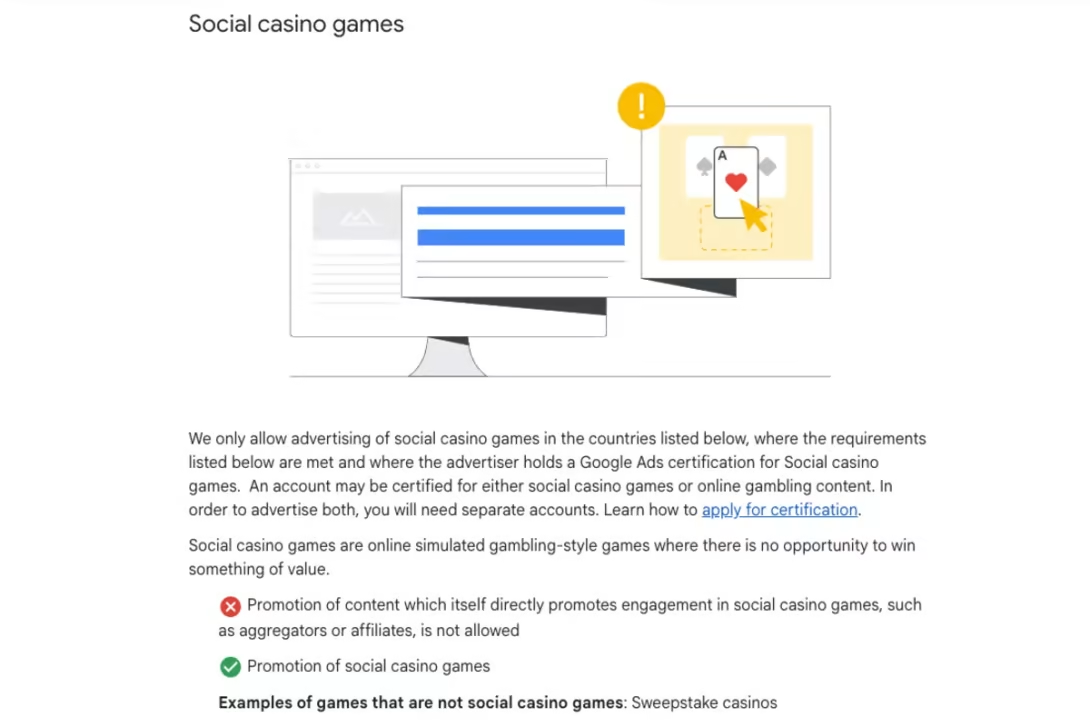
Google has formally updated its global advertising and content policies, declaring that sweepstakes casino games no longer qualify as “social casino games.” The policy revision, which takes effect from October 28, 2025, places these platforms under stricter gambling-related rules. This move is expected to reshape the operational and marketing frameworks of gaming app developers and advertisers worldwide. By treating sweepstakes casinos as gambling entities, Google aims to enhance transparency, ensure consumer protection, and align its digital marketplace with evolving global gaming regulations.
Google’s Policy Overhaul: A Strategic Shift in Online Gaming Classification
In a decisive move to redefine the boundaries between entertainment and gambling, Google has amended its Gambling and Games policy to exclude sweepstakes casinos from the “social casino” category. This reclassification signals a tightening of oversight on platforms that simulate casino-style experiences while offering users the opportunity to win real-world prizes.
Previously, many sweepstakes casino operators leveraged a regulatory gray area, marketing themselves as social gaming apps to bypass gambling restrictions. Google’s updated stance closes this loophole, aligning with broader industry efforts to curb deceptive advertising practices and promote responsible gaming.
Implementation Timeline and Regulatory Context
According to Google’s updated policy, the changes will take effect on October 28, 2025. From that date onward, sweepstakes casino advertisers will no longer be eligible for certification under Google’s social gaming framework. Instead, they must comply with the stricter advertising rules that govern online gambling.
This decision aligns with a global trend of increasing scrutiny over digital gambling and casino-style applications. Several U.S. states and international regulators have intensified their oversight of apps that mimic gambling mechanics—especially those using virtual currencies convertible into real cash rewards. The reclassification reflects a growing consensus that the line between gaming and gambling must be clearly defined to safeguard users from exploitative or misleading practices.
Impact on Developers and Advertising Ecosystem
The implications of Google’s policy revision are far-reaching. Developers and advertisers that previously relied on Google Ads for customer acquisition may now face new operational and compliance hurdles.
Advertising Restrictions: Sweepstakes casino operators will lose access to mainstream ad placements, reducing user reach and increasing marketing costs.
Certification Challenges: Only licensed gambling entities will qualify for certification, effectively excluding unregulated sweepstakes models.
Monetization Risks: Apps offering token-based systems or real-cash redemption mechanics will need to rework their business models or face removal from Google’s advertising network.
Legal Exposure: As the legal distinction between gaming and gambling tightens, developers could face penalties or bans in jurisdictions with strict gambling laws.
This realignment mirrors Google’s broader push for compliance uniformity across global markets, ensuring its platforms remain aligned with evolving legislative and ethical standards.
Industry Reaction and Broader Implications
The gaming and marketing industries have responded with mixed sentiments. While some developers view the reclassification as a necessary step toward industry credibility, others fear a significant contraction in their advertising flexibility.
Industry analysts suggest that Google’s move may accelerate consolidation in the online gaming space, as smaller or unlicensed operators struggle to meet the new compliance demands. Larger, well-capitalized firms—especially those with established gambling licenses—stand to gain from reduced competition and enhanced consumer trust.
The decision also underscores a shift in Google’s corporate philosophy, moving away from passive facilitation of content toward a more regulated and transparent digital ecosystem. This proactive stance aligns with parallel actions taken by Apple and Meta, both of which have tightened their own policies around gambling-related content in recent years.
The Broader Trend: Convergence of Tech, Gambling, and Regulation
From a financial and regulatory standpoint, Google’s reclassification marks a pivotal evolution in the global gaming economy. The blurred distinction between casual gaming and gambling has long posed challenges for regulators and tech platforms alike. By addressing sweepstakes casinos directly, Google reinforces the message that monetized gaming must operate within established gambling frameworks.
For investors and stakeholders, this policy may influence advertising revenue forecasts, market valuations of gaming firms, and future app store approval processes. Meanwhile, regulators are likely to interpret Google’s move as a signal to expand oversight in other digital entertainment sectors that rely on real-money mechanisms.
Conclusion: A Turning Point for Digital Gaming Governance
Google’s decision to reclassify sweepstakes casinos is more than a policy update—it represents a structural shift in how the digital economy interprets risk, responsibility, and regulation. As global markets continue to grapple with the ethical and economic implications of gamified gambling, this move could become a blueprint for how tech giants approach similar challenges across industries.
By drawing a clearer boundary between entertainment and gambling, Google has not only tightened compliance but also reaffirmed its commitment to maintaining integrity within its digital advertising ecosystem. For developers, advertisers, and policymakers, the message is clear: the era of loosely regulated sweepstakes gaming is rapidly coming to an end.
Comments