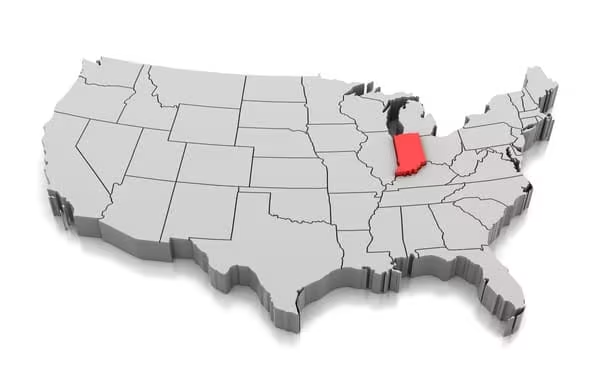
Gambling in Indiana reflects a markedly different landscape compared with broader U.S. trends, shaped by state-specific regulations, consumer preferences, and revenue priorities. While national gambling revenue has surged with the rise of online sports betting and casino expansion, Indiana has taken a more measured approach, balancing growth with regulatory oversight. The state’s gaming market is dominated by traditional casinos and lotteries, with cautious adoption of digital platforms. Understanding these differences highlights not only economic implications for state coffers but also cultural attitudes toward gambling. This article explores Indiana’s unique trajectory in the context of national trends, policy choices, and revenue potential.
Indiana’s Gambling Landscape
Indiana’s gambling ecosystem is anchored in land-based casinos, horse racing, and the state lottery. Unlike states such as New Jersey or Nevada, which have aggressively expanded online betting, Indiana has taken a conservative approach, emphasizing regulatory compliance and controlled market growth. Traditional casinos remain the backbone of gaming revenue, contributing significantly to state budgets, while newer digital gambling initiatives are cautiously introduced to ensure consumer protection and responsible gaming.
National Trends and Comparisons
Across the U.S., the gambling industry has experienced a rapid transformation, driven largely by the proliferation of online sports betting, mobile apps, and liberalized regulations in multiple states. Nationwide, revenue growth has been robust, reflecting both increased consumer engagement and technological adoption. Indiana, however, has not mirrored this pace, instead adopting a measured expansion strategy, which has created a unique divergence in market dynamics when compared to national averages.
Revenue Implications and State Priorities
Indiana’s approach has notable economic consequences. By prioritizing established casinos and lotteries, the state ensures a steady revenue stream with minimal regulatory risk. Nationally, the move toward digital platforms has increased volatility but also unlocked new opportunities for growth. Indiana’s restrained approach indicates a policy preference for stability over rapid expansion, reflecting both fiscal prudence and sensitivity to social impacts associated with gambling.
Cultural and Policy Considerations
The disparity between Indiana and other U.S. states also underscores differing cultural attitudes toward gambling. While online and mobile betting are widely embraced nationally, Indiana’s policies suggest a cautious social stance, balancing revenue generation against potential social costs. Policymakers have emphasized responsible gaming initiatives, illustrating the state’s commitment to sustainable and socially conscious gambling practices.
Looking Ahead: Opportunities and Challenges
As digital platforms continue to gain traction nationwide, Indiana faces both opportunities and challenges. Expanding online gaming could bolster revenue and attract younger demographics, yet it requires careful regulatory frameworks to mitigate risks. Observing the national trend while maintaining state-specific prudence will be critical for Indiana to optimize its gambling market without compromising social responsibility.
Comments