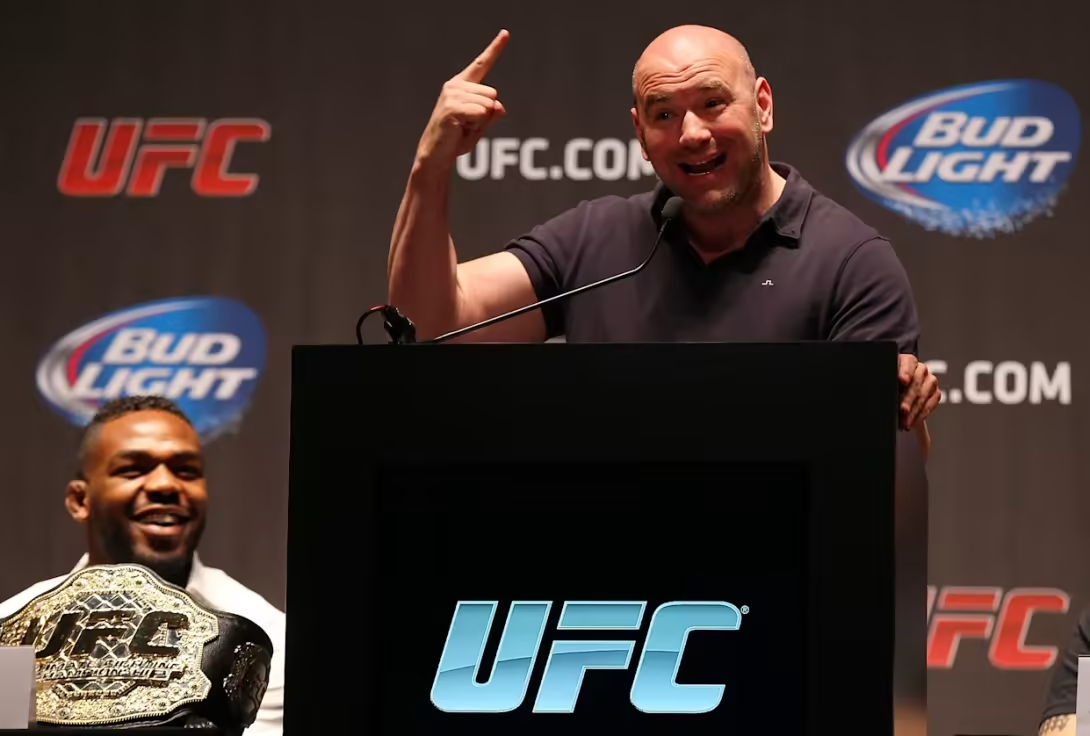
UFC President Dana White has publicly addressed rumors surrounding an alleged Rs. 250 crore ($30 million) gambling debt, calling the claims “clickbait nonsense” fabricated by casino interests. The controversy erupted after reports surfaced suggesting White had accrued massive losses from high-stakes betting. In a fiery rebuttal, White denied any outstanding debts and accused casinos of spreading misleading narratives to tarnish his reputation. Emphasizing his long-standing transparency and financial discipline, the UFC chief dismissed the allegations as a targeted smear campaign, asserting that his success and outspoken personality have made him an easy target for sensationalist reporting.
---
White Confronts Gambling Debt Allegations
The mixed martial arts executive broke his silence this week following widespread speculation about a supposed Rs. 250 crore gambling debt tied to casino activities. Addressing the matter directly, White described the reports as “absolute lies”, claiming that they were deliberately circulated to generate online clicks and undermine his professional image.
White, who is known for his aggressive communication style, stated that he has no outstanding obligations to any gaming establishment and that his financial dealings are fully transparent. “This is complete clickbait from people who can’t stand the fact that I win,” he remarked, underscoring that he is being targeted due to his outspoken persona and success in transforming the UFC into a global sports empire.
---
Casinos and the Alleged ‘Clickbait Campaign’
According to White, the controversy stems from a long-standing tension between high-profile gamblers and casino operators, who often attempt to restrict winning players or manipulate public perception when losses are minimal or exaggerated. He accused certain casino outlets of orchestrating a smear campaign designed to damage his reputation.
White, who has publicly acknowledged being a regular in Las Vegas’s luxury gambling scene, has previously stated that his betting habits are disciplined and strategic. “When I play, I play big—but I don’t lose big,” he said, implying that casinos dislike his winning record more than his risk-taking.
Industry insiders suggest that disputes between casinos and wealthy patrons are not uncommon. However, in White’s case, the scale of the alleged sum and the UFC’s prominence have amplified the narrative, making it ripe for media sensationalism.
---
The UFC’s Stance and Public Backing
The UFC has reportedly stood behind its president, issuing internal reassurances that the allegations hold no merit. Several executives close to White claim that the debt story is inconsistent with the company’s financial records or any legal filings.
White’s allies argue that his detractors are attempting to exploit his public visibility, particularly at a time when the UFC is expanding its global footprint through new media rights, partnerships, and international events. “Dana has always been transparent about his gambling habits,” one source said. “But the notion that he owes casinos millions is a complete fabrication.”
This internal support reinforces the organization’s commitment to its leader, whose reputation for resilience and confrontation has defined both his public persona and his business trajectory.
---
A History of Winning Big and Losing Small
White’s relationship with gambling is well-documented. Over the years, he has spoken openly about winning millions in single-night sessions—a rarity among celebrity gamblers. His success, however, has occasionally led to tensions with major casino brands, some of which reportedly limited his betting limits due to consistent winnings.
While critics argue that White’s gambling tendencies could raise concerns about financial ethics in leadership, supporters contend that his success-driven mindset mirrors the risk-reward dynamics of combat sports itself. For White, gambling has always been a matter of strategy, not recklessness.
“Casinos don’t like players who beat them at their own game,” White once said in a previous interview. “They’ll love you when you lose—but if you win too much, suddenly you’re a problem.”
---
Media Sensationalism and Reputation Management
The story of a Rs. 250 crore gambling debt fits neatly into the modern landscape of online sensationalism, where unverified claims often go viral before facts can catch up. Analysts note that White’s polarizing personality and history of controversy make him a prime target for misinformation.
Public relations experts argue that the casino industry has a vested interest in shaping public perception when disputes arise with high-profile patrons. “Casinos operate within a high-stakes, image-sensitive industry,” said one analyst. “A figure like Dana White threatens that balance if he’s seen as consistently beating the system.”
White’s rebuttal, therefore, serves not only as damage control but also as a message to detractors: he remains unshaken by attempts to distort his public image.
---
White’s Legacy and Unwavering Confidence
As the president of the world’s leading mixed martial arts organization, Dana White has built a reputation on defying critics and thriving under scrutiny. From his role in securing billion-dollar broadcasting deals to overseeing the UFC’s explosive global growth, White’s leadership has often been characterized by unapologetic intensity and resilience.
The recent allegations may test his patience, but not his position. “I’ve built everything I have from the ground up,” he asserted. “No casino rumor or fake headline is going to change that.”
For now, White appears focused on maintaining his momentum—both inside the business world and beyond it. Whether the controversy fades or evolves, his message remains clear: he won’t fold under pressure, no matter who’s dealing the cards.
---
Conclusion
Dana White’s confrontation with the alleged Rs. 250 crore gambling debt controversy reflects a broader narrative about media sensationalism and power dynamics within the gambling industry. While the UFC chief faces renewed scrutiny, his firm rebuttal, combined with his proven track record of resilience, suggests that the controversy may ultimately strengthen, rather than weaken, his public standing.
Comments