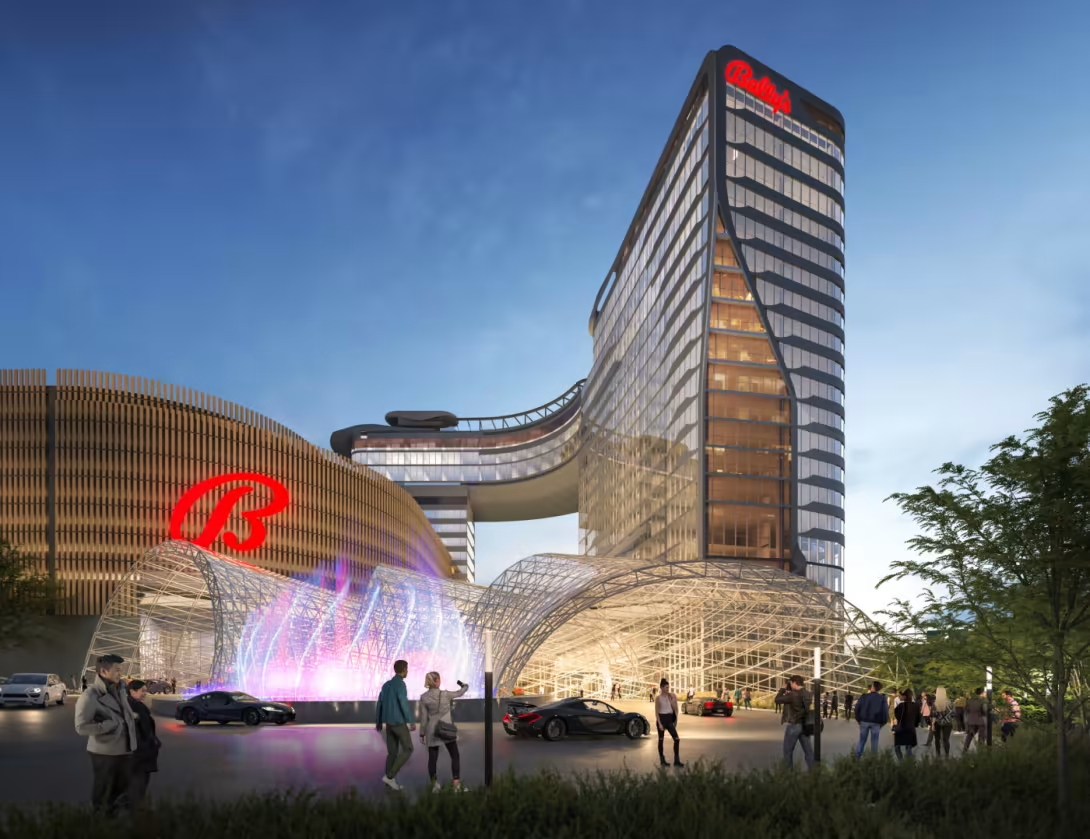
Steve Cohen, owner of the New York Mets, has secured preliminary approval alongside Hard Rock International to build a massive casino and entertainment complex adjacent to Citi Field in Queens, under the project name Metropolitan Park. The proposed $8.1 billion development — one of three downstate casino licenses granted this week — promises a Hard Rock hotel, casino, live-entertainment venue, dining, retail, public green space, and substantial community investments. While supporters highlight potential economic benefits and thousands of jobs, critics warn of social, environmental, and infrastructural risks. The project now awaits final state licensing — and faces scrutiny over its broader impact.
---
From Parking Lot to Entertainment Hub: The Metropolitan Park Vision
The proposed Metropolitan Park site occupies approximately 50 acres of parking lots surrounding Citi Field, historically classed as parkland. Under existing zoning, development was prohibited — which required a legislative override. In 2025, the state Senate passed a bill allowing “parkland alienation,” enabling commercial and entertainment development on the site. This legislative step cleared a major legal barrier for the project.
Once operational, the complex is planned to include a Hard Rock–branded hotel, a full-scale casino, sportsbook, a 5,650-seat performance arena, restaurants, bars, retail space, and a “Taste of Queens” food hall. Beyond commercial amenities, developers pledge to create 25 acres of public green space, integrate improved cycling and pedestrian pathways, and refurbish the nearby 7-train “Mets–Willets Point” station to handle increased footfall.
---
Economic Incentives: Jobs, Revenue, and Long-Term Gains
Proponents argue Metropolitan Park could serve as an economic catalyst for Queens and New York City. The project estimates the creation of around 23,000 union jobs, divided between 16,300 temporary construction roles and approximately 6,700 permanent positions in hospitality, operations, and retail.
Further, the developers have committed to more than Rs. 8,000 crore (given the reported US$8.1 billion figure) of investment into community benefits, infrastructure upgrades, transit improvements, and public amenities — a substantial injection of capital that could stimulate ancillary sectors such as retail, transport, and real estate.
Supporters also highlight the potential for increased tourism and entertainment-driven spending, positioning Queens as a new entertainment hub and possibly elevating property values, local business revenues, and city tax inflows.
---
Regulatory Approval and Next Steps
On December 1, 2025, the New York State Gaming Facility Location Board granted preliminary approval to Metropolitan Park, awarding it one of the three downstate casino licences being distributed this year.
However, final licensing depends on a decision by the New York State Gaming Commission, which will evaluate financial viability, operational integrity, and suitability by December 31, 2025. As part of the agreement, the licensee must pay an initial Rs. 4,100 crore (US$500 million) licensing fee to operate the casino.
Until that final step, Metropolitan Park remains a proposal — albeit a high-profile and well-advanced one.
---
Community Response: Enthusiasm Meets Concern
Support within local government has been widespread. The New York City Council voted 41–2 in favor of necessary zoning changes, and all relevant communities and borough boards in Queens that reviewed the plan backed it.
Developers argue that the project will transform underutilized parking lots into vibrant community space, balancing commercial development with public interest by including significant green space, transit upgrades, and affordable housing pledges on adjacent lands.
Nonetheless, critics — including local grassroots groups and some residents — have voiced serious reservations. Primary objections include potential increases in traffic, strain on public infrastructure, environmental degradation, and the social risks associated with expanded gambling. Some question whether promised community benefits will materialize, or if the area will primarily serve external visitors rather than local residents.
---
Strategic Implications for New York's Economy and Urban Fabric
If fully realized, Metropolitan Park could mark a paradigm shift in urban redevelopment, leveraging entertainment, gaming, hospitality, and public space to stimulate economic growth. For investors and operators, the integrated model minimizes dependence on single-use stadiums or seasonal attractions, diversifying revenue streams.
For Queens and the broader New York metropolitan area, the project may catalyze ancillary development — encouraging investments in housing, retail, transport infrastructure, and tourism. The integration of transit upgrades and improved public amenities could increase accessibility and raise the area’s attractiveness to visitors and residents alike.
At the same time, the project raises essential questions about equitable development, gentrification, community displacement, and the balance between commercial profit and public interest.
---
Conclusion: A High-Stakes Gamble with Broad Consequences
Steve Cohen’s Metropolitan Park represents a bold vision — transforming a once-mundane stadium parking lot into a massive, multifaceted entertainment and hospitality destination. With billions of rupees committed, thousands of jobs promised, and substantial public-space provision in the plan, the project embodies the potential of casino-driven urban redevelopment.
Yet the stakes remain high. Final approval from the state Gaming Commission, community atmosphere, regulatory compliance, and responsible management will determine whether Metropolitan Park becomes a model for future ventures or a cautionary tale of ambition outpacing social and environmental costs. As New York ventures further into casino-driven growth, how it balances financial aspiration with civic responsibility will set a precedent for cities worldwide.
Comments