Goa’s vibrant casino ecosystem—marked by its floating gaming vessels, energetic nightlife, and multicultural tourist influx—has unexpectedly become a source of artistic inspiration abroad. A Brazilian filmmaker, captivated by the region’s blend of glamour, risk, and cultural contrasts, is developing a film that draws from Goa’s evolving gaming scene. This article explores the intersection of entertainment, economics, and storytelling, and examines why Goa’s casino culture resonates globally. It also highlights how the state’s gaming sector has grown into a compelling narrative backdrop that merges financial ambition, human emotion, and the complexities of modern tourism-driven economies.
Goa’s Casinos: A Distinctive Blend of Culture and Commerce
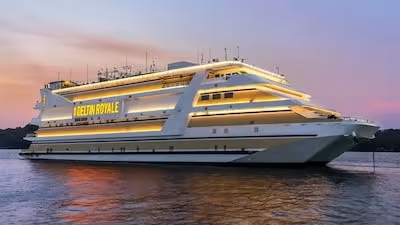
Goa’s casino industry has long stood apart from other gaming markets in Asia due to its unique offshore model, liberal entertainment environment, and thriving tourism base. The state’s floating casinos, anchored along the Mandovi River, present a mixture of high-stakes gaming and festive ambience, attracting players from across India and international markets. This unusual fusion—where local culture coexists with a global entertainment style—creates an atmosphere filled with contrasts. For many storytellers, this setting offers a rich palette of imagery, emotion, and social complexity.
Goa’s gaming sector also mirrors its broader economic trajectory. The industry contributes significantly to local employment and tourism revenue, drawing visitors who seek leisure alongside the state’s natural and cultural attractions. This commercial dynamism is part of what caught the attention of an international filmmaker exploring themes of risk, aspiration, and identity.
Why a Brazilian Filmmaker Found Inspiration in Goa
For a filmmaker crafting narratives around ambition, survival, and human transformation, the casino environment provides a natural stage. Goa’s gaming spaces offer more than shiny interiors—they reflect the interplay of hope and uncertainty that defines human behavior. According to early notes on the project, the Brazilian director was intrigued by how Goa’s nightlife intersects with its relaxed coastal culture, creating a world where people from varied backgrounds converge with different motives.
The film reportedly leans on Goa’s characteristic visuals: neon-lit gaming floors, the lively hum of roulette tables, the river’s calmness juxtaposed against the adrenaline of betting, and the diverse crowd that flows through each vessel. These elements collectively provide a setting that is cinematic, symbolic, and universally relatable.
Economic Forces Behind a Global Narrative
The growing prominence of Goa’s gaming economy has strengthened its identity as more than a holiday destination. The expansion of casinos reflects rising disposable income among domestic travelers and evolving preferences for leisure experiences that blend entertainment with luxury.
These economic factors help explain why Goa serves as an appealing narrative location. It embodies a transitional economy—one that balances tradition with modern enterprise. For a creative mind, this environment allows stories to unfold across social layers, from tourists seeking escapism to workers navigating livelihoods tied to the gaming sector.
Such complexity offers a storytelling richness that can resonate with global audiences.
Cultural Echoes Across Continents
The decision of a Brazilian filmmaker to incorporate themes inspired by Goa underscores a broader cultural reality: entertainment ecosystems across countries increasingly influence one another. Brazil, much like India, hosts diverse communities and bustling entertainment districts, making Goa’s high-energy casino culture a relatable yet fresh creative canvas.
This cross-cultural exchange not only elevates Goa’s global visibility but also highlights the universal themes embedded in casino narratives—risk, transformation, moral dilemmas, and the thin line between fortune and downfall.
A New Chapter for Goa’s Influence in Global Media
While Goa has long served as an iconic setting for music, tourism campaigns, and Bollywood films, its influence reaching South American cinema reflects its evolving global identity. As the Brazilian project progresses, it could introduce new audiences to Goa’s distinct blend of serenity and spectacle.
For the state’s gaming industry, such creative recognition adds an unexpected dimension to its cultural footprint. It reinforces the idea that Goa’s casinos are more than places of recreation—they are dynamic microcosms of ambition and emotion, capable of inspiring stories across borders.
Comments