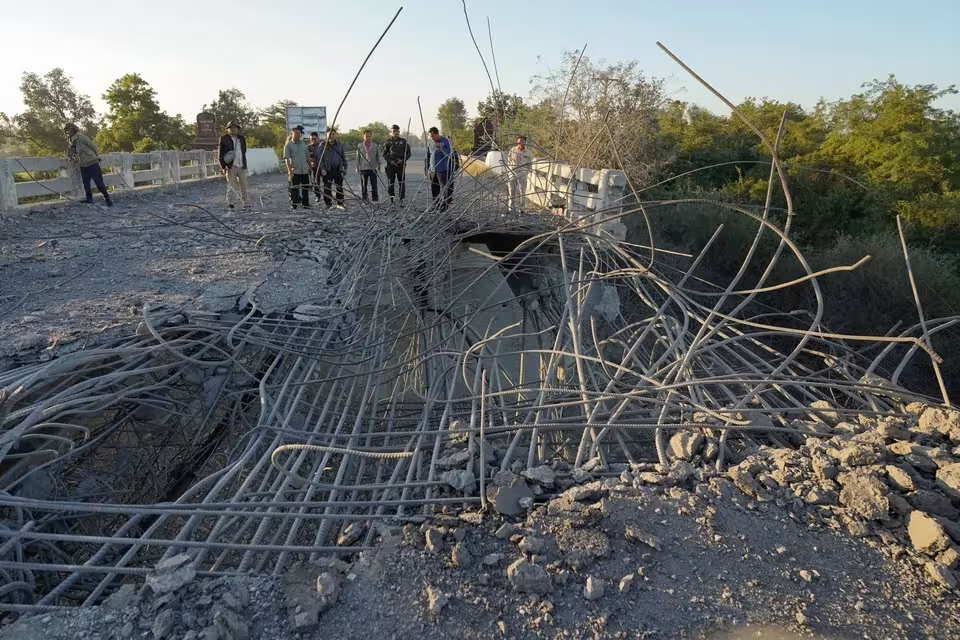
Tensions between Thailand and Cambodia escalated sharply after a Thai military strike targeted a casino complex near the shared border, intensifying regional concern and prompting urgent diplomatic engagement. The incident underscores fragile security dynamics along the frontier, where illicit activity, cross-border crime, and competing jurisdictional claims have long tested bilateral relations. While both governments signaled a desire to avoid broader conflict, the episode has drawn the Association of Southeast Asian Nations into a mediating role. Markets and investors are watching closely, as prolonged instability risks disrupting tourism, border trade, and investor confidence across mainland Southeast Asia.
What Happened at the Border
According to officials familiar with the matter, Thai forces conducted a limited strike against a casino facility located just across the Cambodian border. Authorities described the action as a response to escalating security threats tied to organized crime networks operating in the border zone. The area has historically been sensitive, hosting casinos that cater largely to foreign patrons and often sit at the intersection of regulatory gaps and criminal enforcement challenges.
Cambodian officials condemned the strike, calling it a violation of sovereignty, while Thailand emphasized the need to address cross-border security risks.
A History of Friction Along the Frontier
The Thailand–Cambodia border has periodically been a flashpoint, shaped by disputes over jurisdiction, economic spillovers, and the presence of loosely regulated entertainment hubs. Casinos in border regions have drawn scrutiny for alleged links to money laundering, human trafficking, and illegal gambling operations.
These concerns have repeatedly strained bilateral cooperation, even as trade and tourism between the two countries have expanded over the past decade.
ASEAN Steps In to Cool Tempers
Regional leaders moved quickly to prevent further escalation. ASEAN diplomats initiated consultations aimed at restoring dialogue and reinforcing conflict-avoidance mechanisms. The bloc’s emphasis has been on de-escalation, transparency, and joint security coordination.
For ASEAN, the incident presents a test of its ability to manage intra-regional disputes without external intervention—an issue central to the organization’s credibility and long-term cohesion.
Economic and Investor Implications
Beyond diplomatic fallout, the strike has raised concerns about economic spillovers. Border casinos are closely linked to tourism flows, employment, and informal trade networks. Any prolonged disruption could weigh on local economies and dampen investor sentiment toward regional hospitality and gaming ventures.
Financial analysts note that while the immediate macroeconomic impact appears contained, sustained instability would increase risk premiums for cross-border projects.
The Path Forward
Both Bangkok and Phnom Penh have publicly expressed interest in resolving the dispute through dialogue, signaling that the strike was not intended to trigger wider confrontation. The focus now shifts to confidence-building measures, enhanced border coordination, and clearer regulatory oversight of high-risk zones.
For Southeast Asia, the episode is a reminder that economic integration and political stability remain deeply intertwined—and that swift diplomacy is essential when security incidents threaten to unravel both.
Comments