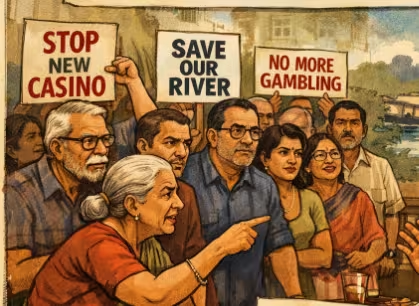
Panaji Mayor Rohit Monserrate has clarified that the Corporation of the City of Panaji (CCP) lacks the legal authority to regulate or prohibit offshore casino vessels operating in the Mandovi River, despite mounting public opposition to a proposed new entrant. While stating that he is personally not in favour of casinos, the mayor emphasized that jurisdiction over licensing and river-based operations does not rest with the municipal body. Residents had urged the corporation to adopt a resolution opposing the docking of another casino vessel. The issue underscores ongoing tensions between civic sentiment, tourism-driven revenues, and regulatory oversight in Goa’s gaming sector.
Civic Concerns Over Proposed Offshore Casino
Public debate has intensified in Panaji following reports that a new offshore casino vessel may soon be stationed in the Mandovi River. Residents have voiced objections, citing concerns ranging from environmental impact to the city’s social fabric and urban identity.
Citizen groups have urged the municipal corporation to formally oppose the move, pressing elected representatives to reflect public sentiment through an official resolution. The controversy highlights the persistent friction between local communities and the state’s casino-driven tourism economy, which has been a significant contributor to Goa’s revenue streams.
Mayor’s Position: Personal Opposition, Institutional Constraints
Mayor Rohit Monserrate addressed the issue by drawing a distinction between personal views and institutional authority. He stated that although he does not support the expansion of casino operations, the Corporation of the City of Panaji does not have jurisdiction over the licensing or regulation of offshore gaming vessels.
He clarified that matters concerning river navigation and offshore commercial activity fall outside the municipal corporation’s mandate. According to the mayor, decisions regarding docking permissions and operational licenses are governed by state-level authorities and relevant regulatory agencies.
“What happens in the river has nothing to do with the corporation,” he said, underscoring the legal boundaries within which the civic body operates.
Regulatory Framework and Jurisdictional Boundaries
In Goa, offshore casinos operate under licenses granted by the state government and are regulated through a framework that encompasses gaming laws, maritime rules, and tourism policies. Municipal corporations primarily oversee urban infrastructure, sanitation, property taxation, and local civic administration.
This jurisdictional demarcation often creates public confusion when contentious commercial developments arise. While municipal bodies may express opinions or pass resolutions, their authority does not extend to revoking or denying state-issued licenses for offshore operations.
The mayor indicated that he would place residents’ concerns before the council, but any resolution would carry symbolic rather than executive weight.
Economic Stakes and Policy Tensions
The casino industry remains a vital component of Goa’s tourism ecosystem, generating employment and contributing significantly to state revenues through license fees and taxes. Offshore vessels, in particular, represent high-value assets within the gaming landscape.
At the same time, sections of civil society continue to question the long-term social and environmental costs of casino proliferation. The proposed addition of another vessel has reignited debates about sustainable tourism, urban congestion, and the city’s cultural character.
This episode reflects a broader policy tension: balancing fiscal incentives with community expectations. As tourism-dependent regions diversify revenue sources, conflicts between local governance structures and state-level economic priorities are likely to persist.
The Road Ahead
The Panaji mayor’s remarks underscore the importance of understanding institutional competencies within India’s layered governance system. While municipal authorities serve as the closest interface between citizens and government, ultimate decision-making power in specialized sectors such as offshore gaming resides elsewhere.
Whether the proposed casino vessel ultimately docks in the Mandovi will depend on state authorities and regulatory clearances. For now, the controversy serves as a reminder that in complex policy arenas, public sentiment and jurisdictional authority do not always align.
For investors and stakeholders in the hospitality and gaming sectors, the episode illustrates how regulatory clarity — and the perception of it — remains central to operational stability and long-term planning.
Comments