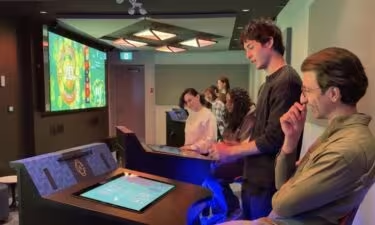
A simulated casino environment in downtown Montreal is advancing academic understanding of digital gambling behavior. Operated by Concordia University, the CHANCE Collaboratory replicates modern gaming atmospheres to study how digital interfaces, social cues and decision-making processes influence risk-taking. While no real money changes hands, the research facility mirrors contemporary casino design to observe behavioral patterns.
Scholars aim to identify how technological features and immersive environments may heighten gambling-related harm, particularly among younger demographics accustomed to digital ecosystems.
A Controlled Casino Environment
At first glance, the CHANCE Collaboratory resembles a traditional gaming floor, complete with terminals and ambient lighting. Yet the space serves research objectives rather than commercial ones.
The initiative, housed at Concordia University on its Sir George Williams Campus, allows researchers to isolate environmental and technological variables within gambling settings.
Studying Digital Influence
Researchers are examining how design features such as sound effects, reward animations and social interaction mechanisms influence player decisions. Digital gambling platforms increasingly integrate behavioral triggers intended to prolong engagement.
The project seeks to understand how these mechanisms intersect with risk perception, impulsivity and peer influence.
Public Health Implications
With online and mobile wagering expanding globally, policymakers are grappling with rising problem gambling rates. Findings from the CHANCE project may inform regulatory standards, advertising restrictions and digital interface design policies.
Broader Significance
By replicating gaming conditions without financial stakes, the laboratory provides rare empirical insight into behavioral economics within digital entertainment ecosystems. The research underscores growing concerns about the gamification of risk.
Comments